

Weed Control in Organic Olive Orchards
My approach to organic olive weed control: protect tree rows, keep soil covered between rows, and clear harvest routes. I’d start with about 4 inches of mulch near young trees, keeping it away from trunks and emitters, and mow row middles before weeds set seed.
Here’s how I’d divide the work:
- Near trees: Use mulch and hand removal, giving trees in their first four to five years priority.
- Between rows: Mow or use controlled grazing while leaving enough cover to limit erosion. Sheep generally pose less browsing risk than goats.
- As soil dries: Reduce living weeds that compete for water. Short weeds still use water.
- Before harvest: Clear collection areas and equipment lanes. Confirm livestock exclusion periods with your organic certifier; manure rules may require 90 or 120 days before harvest.
- Each season: Check weeds, soil moisture, irrigation, tree damage, and mulch depth, then record what worked.
<u>I’d let soil conditions - not fixed dates - guide the timing.</u> That means keeping machinery and livestock off wet ground and adjusting control to your rainfall, slope, water supply, and harvest method.
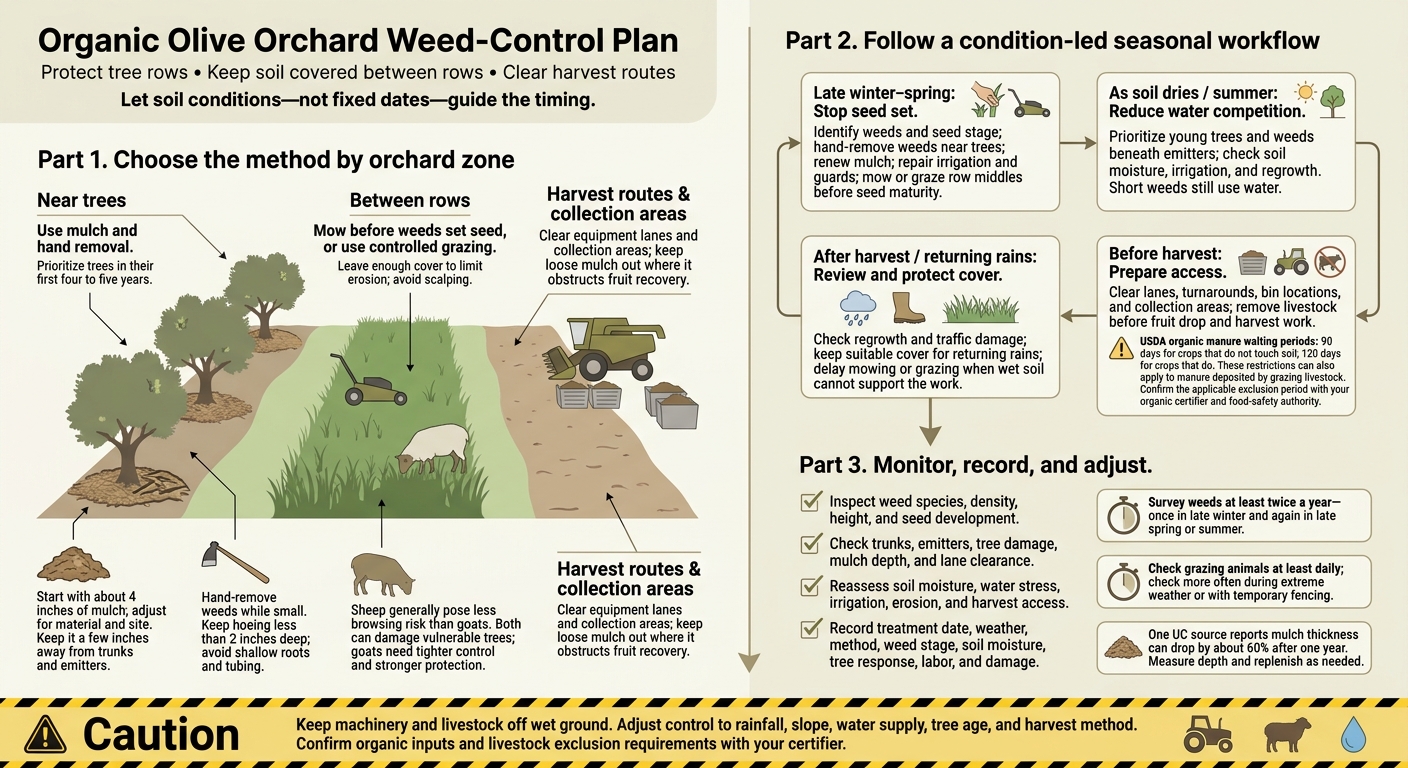
Organic Olive Orchard Weed-Control Plan
Mowing, Mulching, and Hand Removal
Mow Between Rows Before Weeds Set Seed
Use a rotary mower for routine, relatively even vegetation. Flail mowers tackle heavier growth but require more power and upkeep. Adjust cutting height to weed height, ground clearance, equipment, and terrain. Avoid scalping, especially on slopes or during hot, dry weather.
Leave clippings in place to shade the soil, add organic matter, and limit erosion. Mow before seed heads form. In tougher alleys, use controlled grazing instead of heavier cultivation.
Save tillage for problem spots. Routine mowing better protects soil cover and roots while controlling erosion. USDA organic standards require cultivation practices that maintain or improve soil condition and minimize erosion. Before harvest, keep vegetation short in travel lanes and collection areas, but leave stable residue where there’s no traffic.
Suppress Weeds With Tree-Row Mulch
Remove existing weeds, then start with about 4 inches of mulch, adjusting the depth for your material and site. Mulch suppresses seedlings and helps keep soil moisture steady. Keep it a few inches away from trunks and emitters.
Check mulch after rain, irrigation, and traffic. One UC source reports that mulch thickness can drop by about 60% after one year, so plan to replenish it. Use mulch where machinery can’t work without risking damage to soil or young trunks.
Seed-free straw offers low-cost coverage where it’s available locally, though it needs frequent replenishment. Wood chips last longer, but hauling and spreading add to the cost. You can also reuse healthy chipped pruning residues on site to reduce hauling. Spread them deeply and evenly.
Choose mulch free of viable weed seed, and confirm inputs with your organic certifier. Budget for hauling, spreading, and replenishment - not just the material. Pull weeds promptly along edges where mulch is thinning. If loose mulch gets in the way of fruit collection, keep it out of collection areas and equipment lanes rather than stripping cover from the entire orchard.
Clear Weeds Around Trunks and Irrigation Lines
Remove weeds while they’re small, before roots grow deep. Pull them after rain or irrigation, when the soil is soft. In the open strip beside mulch, keep hoeing less than 2 inches deep and steer clear of shallow roots and tubing.
Around guards and emitters, remove weeds by hand. A string trimmer can wound bark or cut irrigation lines. These narrow-area tasks work alongside grazing and mowing in the row middles.
| Method | Precision | Labor | Soil disturbance | Main damage risk |
|---|---|---|---|---|
| Hand pulling | Highest beside trunks and emitters | High | Minimal | Scraping bark or disturbing roots |
| Shallow hoeing or weed knife | High in accessible gaps | Moderate | Low if kept shallow | Cutting roots or tubing |
| String trimmer | Moderate | Moderate | Very low | Wounding bark; damaging guards, stakes, or irrigation parts |
| Hand removal at mulch edges | High | Moderate, recurring | Minimal | Displacing mulch over emitters or against trunks |
sbb-itb-4066b8e
Organic Weed Management for Small-Scale Farming
Controlled Grazing With Sheep or Goats
When mowing leaves too much regrowth between rows, grazing can keep cover short without cultivation. Keep grazing in row middles, paired with mulch and hand removal near trees. It can slow regrowth, but it won’t eliminate competition for water. After each grazing period, check vegetation height, regrowth, exposed soil, and tree water status.
Choose Livestock and Guard Trees
Match livestock to your weeds and your ability to protect trees. Sheep are generally the lower-risk option for grassy row middles. Goats need tighter control around olive trees. Both can damage vulnerable trees when forage runs short.
| Consideration | Sheep | Goats |
|---|---|---|
| Vegetation control | Mainly grasses and low herbaceous weeds | Taller, woody, and leafy vegetation |
| Browsing risk | Lower, but may eat olive leaves and shoots | Higher risk to foliage, shoots, bark, and low branches |
| Young trunks | Use sturdy guards; exclude sheep from vulnerable young blocks | Use strong guards and reliable exclusion |
| Branch damage risk | Shield reachable limbs or provide clearance | Use more extensive protection or exclude goats |
| Tubing protection | Secure or shield tubing; inspect after grazing | Use strong protection against chewing and pulling |
Give animals enough room to move without rubbing trunks or blocking equipment access. Use secure perimeter fencing and temporary paddocks, with gates placed away from fragile irrigation. Provide water, shade, predator protection, and minerals on firm, well-drained ground away from trunks.
Check animals at least daily for injuries, stress, forage shortages, and escape risks. Check more often during extreme weather or when using temporary fencing.
Time Grazing for Soil Conditions and Harvest
Follow weed flushes rather than fixed dates. Use short grazing periods while weeds are growing, before mature seeds develop. Base animal numbers and grazing duration on available forage and the cover that needs to remain - not a universal stocking rate.
Inspect daily. Move animals before bare patches, tree browsing, or repeated feeding on regrowth develops. Keep livestock off saturated soil: deep hoofprints, smeared soil, or muddy gates are signs to stop grazing. Let vegetation recover before animals return.
Grazing should clear harvest routes without creating cleanup or food-safety problems. Remove animals before fruit drop and harvest work, leaving time to inspect collection areas and equipment lanes.
USDA organic guidance sets manure waiting periods of 90 days for crops that do not touch soil and 120 days for crops that do. NRCS notes that these restrictions can also apply to manure deposited by grazing livestock. Record grazing dates, paddocks, and animal numbers, then confirm the harvest exclusion period with your certifier and food-safety authority.
Seasonal Weed-Control Schedule
Plan by season, not fixed dates. Adjust the work to local rainfall, weed species, irrigation, slope, tree age, and harvest timing. Survey weeds at least twice a year - once in late winter and again in late spring or summer - to track changes in the weeds present.
Use these seasonal windows to choose a method for each orchard zone.
| Season and orchard zone | Primary method | Objective | Water considerations | Harvest-access needs |
|---|---|---|---|---|
| Late winter–spring: tree rows | Hand removal, mulch renewal, irrigation repair | Protect young trees and stop seed set | Remove weeds near emitters and repair leaks | Keep trunks and irrigation lines accessible |
| Late winter–spring: row middles and slopes | Mowing or grazing before seed maturity; protective cover | Reduce seed set while keeping soil covered | Reduce living cover as soil water declines | Avoid ruts from working on wet ground |
| Summer: tree rows | Targeted hand removal; careful trimming | Reduce competition in wetted root zones | Check soil moisture and regrowth | Keep access lanes open |
| Summer: row middles and harvest lanes | Mowing; control of tall, dry vegetation | Reduce dry fuel and traffic obstructions | Keep protective low cover or residue | Keep equipment and emergency routes open |
| Before harvest: harvest lanes and ground collection zones | Trimming, selective clearing, livestock removal | Clear routes for nets, bins, and machinery | Soil must be firm enough for traffic | Remove loose debris that could obstruct collection |
Late Winter and Spring: Stop Weed Seed Set
Start in tree rows, then move to row middles and slopes. Identify the main weeds and their seed stage so you can mow before seed set. Repair irrigation leaks and damaged tree guards, then renew tree-row mulch without letting it touch trunks. Check growth more often as spring progresses. Hold off on machinery or livestock when soil is prone to compaction.
Summer: Limit Weed Water Use
As soils warm, shift the focus from seed control to water competition. Give priority to young trees and weeds beneath emitters. Remove weeds near trunks and irrigation lines, then revisit spots where they keep growing back. Check soil moisture along with irrigation performance.
Autumn: Clear Harvest Routes and Collection Areas
Work backward from the harvest date to keep access open. Allow enough time to remove livestock before nets, machinery, or ground collection begin.
Check harvest lanes, turnarounds, bin locations, and ground collection zones for loose straw or wood chips that could block nets or hinder fruit recovery. After harvest, check for regrowth and traffic damage. Keep suitable cover for returning rains, and delay mowing or grazing if wet soil cannot support the work.
Conclusion: Build and Review Your Weed-Control Plan
Turn the seasonal schedule into a repeatable weed-control plan for each orchard zone.
Measure success by tree health, soil cover, and harvest access. Suppress weeds in tree rows, row middles, and harvest lanes based on the season and water demand. Combine methods to protect soil and keep routes clear.
Choose Methods by Orchard Zone
Choose methods that fit your orchard’s limits.
| Decision factor | Method to favor | Key safeguard |
|---|---|---|
| Tree age | Mulch and hand removal around young trees; targeted row control in mature-tree rows | Inspect trunks, tree vigor, and emitters |
| Water supply | Control competing vegetation early when water is scarce | Keep protective residue rather than leaving soil bare |
| Slope | Mow to maintain inter-row cover | Avoid traffic on saturated ground |
| Labor | Use durable mulch and mowing when labor is limited; hand-remove weeds in small areas | Match methods to available labor and equipment |
| Mulch supply | Use available organic mulch and replenish material as it settles | Check depth and keep mulch off trunks |
| Livestock access | Use controlled sheep grazing with secure fencing | Watch for browsing; goats need stronger tree guards |
| Harvest system | Clear paths for hand harvest and lanes for machinery | Match clearance to routes, collection areas, and equipment |
Organic mulch can lose approximately 60% of its thickness within one year. Measure its depth and replenish it as needed.
Use a Seasonal Monitoring Checklist
Check the same items each season so you can track changes over time.
- [ ] Inspect weed species, density, height, and seed development. Schedule the next action before weeds set seed.
- [ ] Check trunks, emitters, and lanes for damage and clearance.
- [ ] Reassess water stress, soil moisture, irrigation performance, soil disturbance, erosion, and harvest access.
- [ ] Record the treatment date, weather, method, weed stage, soil moisture, tree response, labor, and damage. Use these notes to plan the next treatment.
FAQs
How can I tell if weeds are stressing my olive trees?
Weeds compete with olive trees for water and nutrients, especially in rainfed orchards or during dry seasons. Monitor soil moisture and tree productivity to track orchard conditions. Gypsum resistivity blocks track moisture infiltration, while stem water potential measurements indicate when trees need irrigation.
Watch for limited root growth or poor water absorption, too. Both can result from soil compaction caused by overgrazing or tillage.
How do I control perennial weeds without tilling?
Control perennial weeds without tilling by mowing or shredding vegetation three to five times a year. This keeps plant height in check and prevents seed production. Organic mulches, such as shredded pruning residues, suppress weeds by blocking light and creating a nitrogen-poor surface.
Controlled livestock grazing also manages vegetation while adding nutrients to the soil. These methods protect soil structure, retain moisture, and preserve microbial diversity.
How much ground cover should I leave during drought?
During drought, limit competition for water with olive trees. Mow or shred cover crops in early spring, typically March–April, to terminate them before the dry season.
In rainfed orchards with limited rainfall, naturally growing cover or drought-tolerant native species can help control erosion while keeping water demand low. Apply more than 3 tons of organic mulch per acre in spring to retain soil moisture and protect the ground from heat stress.