

Barrel Aging in Balsamic Vinegar Production
Barrel aging is the key process that transforms grape must into rich balsamic vinegar over decades. Using a series of wooden barrels, called the batteria, the vinegar matures as it passes through different woods like oak, cherry, and chestnut, each adding unique flavors. This aging happens in attic spaces exposed to seasonal heat and cold, which drive evaporation, fermentation, and flavor concentration. After years of careful tending, the vinegar develops its dense texture and complex taste.
Key facts:
- Barrel Types: Made from woods like oak (vanilla notes), cherry (fruity sweetness), and chestnut (bold color and tannins).
- Aging Process: Annual evaporation reduces 100 liters of grape must to 15 liters over 12 years.
- Temperature Role: Summer heat boosts fermentation; winter cold allows resting and maturation.
- Certification: PDO balsamic vinegar requires 12+ years of aging, while PGI products have shorter aging periods and more flexibility in ingredients.
This process preserves the depth and quality of the final product, ensuring every bottle reflects years of careful craftsmanship.
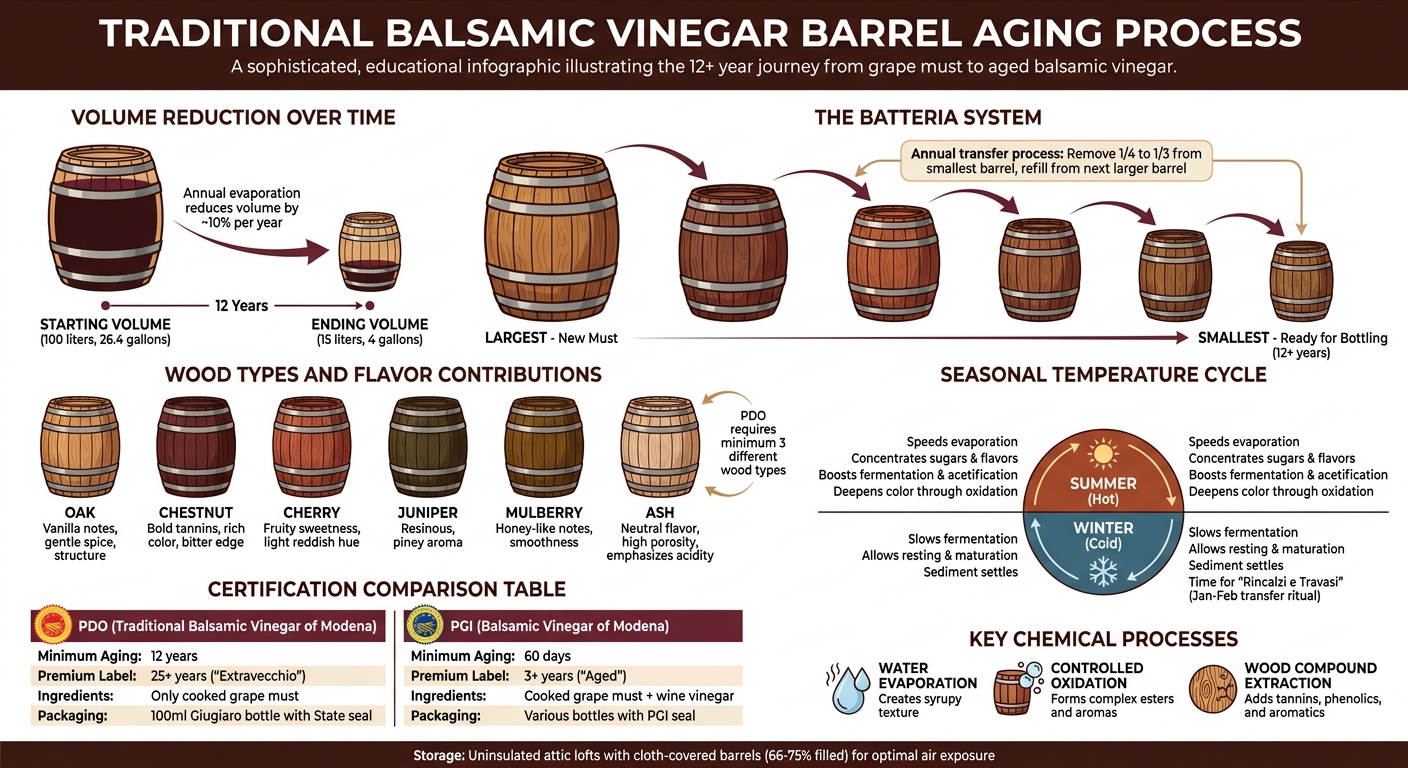
Traditional Balsamic Vinegar Barrel Aging Process and Batteria System
Wood: Balsamic Vinegar's Secret Ingredient
sbb-itb-4066b8e
The Batteria System: A Series of Aging Barrels
At the heart of traditional balsamic vinegar production lies the batteria system, a carefully orchestrated method that allows the vinegar to mature and develop its signature flavors over time. This system consists of a series of wooden barrels - usually five to ten - arranged in descending sizes. As the vinegar moves through these barrels, it becomes more concentrated and complex.
How the Barrel Series Works
The batteria system operates in a slow, methodical manner. The smallest barrel in the series holds the oldest and most refined vinegar, ready for bottling. When producers remove about one-quarter to one-third of this vinegar, they refill the barrel with vinegar from the next larger one. This process continues up the line, with the largest barrel being replenished with freshly cooked grape must. This must, which has already undergone fermentation for a few years, comes from a "mother barrel" known as a badessa.
Each barrel in the series is made from a specific type of wood, each contributing distinct characteristics to the vinegar. In addition to oak, cherry, and chestnut, woods like mulberry and juniper add even more variety to the flavor profile. As Compagnia Del Montale explains:
"Each wood confers a particular characteristic: the colour of chestnut rich in tannins, the ease of getting thick with mulberry, the resinous flavors of juniper, the sweetness of cherry and the typical vanilla aroma of prized oak".
To encourage evaporation and oxygenation, barrels are only filled to about two-thirds or three-quarters of their capacity.
Annual Topping and Transferring: Rincalzi e Travasi
Every January or February, vinegar makers perform an essential ritual called rincalzi e travasi, which involves topping up and transferring the vinegar. This process compensates for the roughly 10% of volume lost annually due to evaporation, as well as the small amount drawn for bottling. Using a tool called a "thief" - a long glass pipette - producers transfer vinegar between barrels without disturbing the sediment. Acetaia Giusti describes this delicate process:
"The master initially withdraws a small amount of Balsamic Vinegar from the smallest cask in the battery; this is the oldest product, and the only one that is drawn off for bottling".
This yearly routine ensures a harmonious blend of older and newer vinegar, allowing flavors to evolve steadily over decades. The careful balance of wood interaction and aging creates the depth and richness that define traditional balsamic vinegar, setting the stage for further refinement in the upcoming steps of the process.
Wood Types and Their Effects on Flavor
The choice of wood for barrels plays a huge role in shaping the character of balsamic vinegar. In the traditional batteria system, eight wood types - oak, chestnut, cherry, juniper, mulberry, ash, acacia, and walnut - are permitted. To qualify as Traditional Balsamic Vinegar, the aging process must involve at least three of these wood types. This variety creates a depth of flavor that single-wood aging simply can't achieve. The interaction between these woods lays the groundwork for the aging process, which involves temperature shifts and chemical changes.
Common Woods Used in Barrel Construction
Each type of wood contributes its own unique flavors and aromas to the vinegar as it ages through the barrel series:
- Oak: Known for its vanilla notes and gentle spice, oak is often used in the largest barrels during the early stages of acidification and maturation. It provides structure and balance.
- Chestnut: This wood adds bold tannins and a rich color, introducing a slightly bitter edge that offsets the vinegar's sweetness.
- Cherry: Typically used later in the aging process, cherry imparts a soft fruitiness and a light reddish hue that mellows the overall flavor profile.
- Juniper: A little goes a long way with juniper. Its strong, resinous, and piney aroma enhances the vinegar's fragrance.
- Mulberry: Offers mellow, honey-like notes that smooth out the vinegar's taste.
- Ash: Neutral in flavor, ash has high porosity, which emphasizes acidity and allows for controlled evaporation.
The condition of the barrels - whether newly constructed or well-seasoned - also plays a critical role in flavor development.
New Barrels vs. Seasoned Barrels
New barrels undergo a pre-seasoning process where they are filled with wine vinegar for at least a year before being used for aging balsamic vinegar. This step helps to temper the wood, preventing it from releasing excessive tannins or altering the vinegar's color too quickly. This is particularly important for chestnut barrels, which are naturally high in tannins.
Seasoned barrels, on the other hand, bring a completely different dimension to the aging process. Some of these barrels have been in use for centuries and develop a biofilm of acetic acid bacteria and other microorganisms on their inner surfaces. This biofilm becomes an integral part of the vinegar's flavor, turning the barrel into more than just a container. As asmr.education puts it:
"The barrel is not just a vessel; it is a living ecosystem".
Over time, the wood itself evolves, storing layers of flavor that contribute to a more harmonious and complex profile. When an old barrel starts to break down, artisans often repurpose its usable parts, like ribs, to craft new barrels, preserving its legacy and flavor memory.
Temperature Changes and the Aging Process
Unlike wine or cheese, which thrive in stable conditions, traditional balsamic vinegar benefits from dramatic temperature shifts. In Modena, Italy, producers intentionally store their barrels in uninsulated attic lofts, exposing the vinegar to the region's seasonal highs and lows. These barrels are left open, covered only by cloth, allowing the vinegar to interact with its surroundings. As Sapore Balsamico explains:
"The attic was an ideal aging location for Traditional Balsamic Vinegar because of the extreme fluctuations in temperatures in Modena, hot summers and cold winters... the aging process of Balsamic Vinegar actually benefits from the alternating summer heat and the winter cold."
This exposure to seasonal extremes is critical for transforming cooked grape must into the rich, syrupy vinegar that meets PDO standards. Each season plays a unique role in shaping the vinegar's character.
Summer Heat and Evaporation
During the hot summer months, attic temperatures soar, speeding up water evaporation through the wooden staves of the barrels. This process concentrates the vinegar's sugars, alcohol, and aromas, creating a thicker texture and a sweeter flavor profile. The heat also stimulates acetification, as bacteria become more active, and encourages oxidation, which deepens the vinegar's color and adds complexity. As noted by aedbalsamico.com, "The heat of summer concentrates the sugar, alcohol and flavours".
Winter Cold and Resting
In contrast, the cold winter months slow down fermentation and other reactions, allowing the vinegar to rest. This pause is essential for sediment to settle at the bottom of the barrels, enhancing clarity and smoothness. Winter also sets the stage for "rincalzi e travasi" (topping and transferring), a meticulous process carried out in January and February. During this time, the master vinegar maker uses a glass pipette to transfer liquid between barrels, blending flavors from different woods to achieve the intricate layers of taste that define authentic Traditional Balsamic Vinegar.
Aging Requirements and Certification Standards
After spending years maturing in carefully selected barrels, balsamic vinegar undergoes certification to guarantee its quality and origin.
Certification plays a key role in distinguishing authentic balsamic vinegar from imitations. In Europe, two designations - Protected Designation of Origin (PDO) and Protected Geographical Indication (PGI) - set strict rules for aging, ingredients, and production methods to uphold authenticity.
PDO vs. PGI Requirements
Traditional Balsamic Vinegar of Modena (PDO) represents the pinnacle of craftsmanship. It must age for at least 12 years in wooden casks and is made exclusively from cooked grape must, with no additives allowed. The highest-quality version, known as "Extravecchio", requires a minimum of 25 years of aging. Each bottle is presented in a distinct 100 ml ampoule designed by Giorgetto Giugiaro and carries an official State seal.
On the other hand, Balsamic Vinegar of Modena (PGI) allows for more flexibility. It requires a minimum aging period of 60 days, although producers can extend this time for enhanced flavor. Unlike PDO vinegar, PGI blends cooked grape must with wine vinegar, and up to 10% of the mixture may come from vinegar aged for at least 10 years. If a PGI product is labeled "Aged", it has matured for at least 3 years in wooden barrels.
| Feature | Traditional Balsamic (PDO) | Balsamic Vinegar of Modena (PGI) |
|---|---|---|
| Minimum Aging | 12 years | 60 days |
| Premium Aging Label | 25+ years ("Extravecchio") | 3 years ("Aged") |
| Ingredients | Only cooked grape must | Cooked grape must and wine vinegar |
| Packaging | Signature 100 ml Giugiaro bottle | Various, with PGI seal |
These differences in aging and ingredients highlight how certification protects traditional methods and ensures product integrity.
Why Certification Matters for Authenticity
Certification is crucial for preserving the integrity of balsamic vinegar. Before receiving certification, the vinegar undergoes laboratory tests to confirm its acidity, consistency, and aroma. These tests ensure the vinegar has absorbed enough tannins and wood aromas during the aging process to meet quality standards. Without certification, products labeled as "balsamic condiments" might claim aging periods that don’t align with official regulations. To verify authenticity, always look for the official PGI logo, which confirms the vinegar has met required aging and quality assessments.
The Chemistry of Barrel Aging
Barrel aging transforms grape must into rich, aromatic balsamic vinegar through a series of intricate chemical processes. The key drivers of this transformation are water evaporation, controlled oxidation, and extraction of wood compounds. Together, these processes work over years to create the syrupy texture and complex flavor profile that define true balsamic vinegar.
Water Loss and Flavor Concentration
Evaporation is one of the most noticeable changes during barrel aging. The wood's natural pores let water vapor escape while retaining the sugars and aromatic compounds. This gradual water loss significantly reduces the liquid’s volume. For instance, after 12 years of aging, 26.4 gallons (100 liters) of grape must shrink to just 4 gallons (15 liters) of finished vinegar.
"Each year it reduces in volume through evaporation, concentrating as it ages and resulting in a rich, syrupy viscosity and aromatic bouquet." - Sapore Balsamico
The attic storage rooms, often used for aging, amplify this effect during the hot summer months. The heat speeds up evaporation, thickening the vinegar and enhancing its sweetness. Over time, the once-thin liquid becomes a dense, glossy condiment that clings to a spoon.
Oxidation and Aroma Formation
Controlled exposure to air, known as micro-oxygenation, plays a pivotal role in shaping the vinegar’s aroma. This process converts sugars into alcohol and acetic acid while creating esters that contribute to its signature fragrance.
"Oak is prized for its tight grain, structural strength, and moderate porosity, which allows a slow and controlled exchange of air. This micro-oxygenation encourages the acetification process and contributes to the development of complex esters over time." - asmr.education
Barrels are intentionally filled to only 66% to 75% of their capacity, ensuring enough air contact to support oxidation without overexposing the liquid. Seasonal changes also influence the process: summer heat promotes fermentation and acetification, while winter cold slows these reactions, allowing the flavors to deepen and mature.
Wood Compounds and Layered Flavors
The barrels themselves contribute significantly to the vinegar’s character. As the acidic liquid interacts with the wood, it extracts tannins, phenolic compounds, and volatile aromatics from the wood’s cellular structure. Each type of wood imparts unique qualities: oak brings vanilla and subtle spice, chestnut adds color and astringency, cherry offers fruity sweetness, and juniper lends resinous, pine-like notes.
"The wood is not a passive container. It is an active participant in the flavor, aroma, and color of traditional balsamic vinegar." - ASMR Education
Over the years, a biofilm forms within the barrels, further aiding in the extraction of these wood compounds. As the vinegar passes through the batteria system - a series of progressively smaller barrels made from different woods - it absorbs a wide range of flavors, creating a depth and complexity that cannot be replicated through modern shortcuts or artificial additives.
Conclusion
Barrel aging is at the heart of transforming grape must into the rich and complex balsamic vinegar we know today, a process that spans 12 to 25 years. Using the batteria system, the vinegar is transferred through a series of progressively smaller casks, each made from different woods. These woods - oak, cherry, and chestnut - impart their own unique qualities, from oak's warm vanilla notes to cherry's fruity undertones and chestnut's tannic depth.
The attic storage spaces where the vinegar is aged play a crucial role, as seasonal temperature changes drive the chemical reactions that define its character. Over time, the grape must reduces significantly, creating a dense, syrup-like consistency while developing intricate aromas and esters.
Certification standards ensure the quality and authenticity of balsamic vinegar. Products with the PDO (Protected Designation of Origin) label must be made exclusively from cooked grape must and aged for at least 12 years in a batteria. These undergo strict evaluations to meet the highest standards. On the other hand, PGI (Protected Geographical Indication) allows for blends of cooked must and wine vinegar, with shorter aging periods, making it a versatile option for everyday use.
Choosing barrel-aged balsamic vinegar, like the Traditional 18-Year Aged Dark Balsamic or Molto Denissimo 25-Year Aged varieties from Big Horn Olive Oil, means embracing a product crafted through age-old techniques and natural processes. These certification standards ensure that every bottle represents a centuries-old tradition, setting the benchmark for what authentic balsamic vinegar should be.
FAQs
Why does traditional balsamic vinegar use multiple barrels instead of one?
Traditional balsamic vinegar relies on a fascinating aging process that involves multiple barrels, each made from different types of wood. Why? Because every type of wood adds its own distinct flavor and aroma to the vinegar. For example:
- Chestnut contributes a touch of bitterness.
- Oak brings in warm, vanilla-like notes.
- Cherry adds a fruity sweetness.
- Juniper offers a hint of spice.
- Mulberry enhances acidity.
The vinegar is aged in a series of barrels, known as a batteria, which gradually decrease in size. Over time, this process doesn’t just concentrate the liquid - it layers flavors, creating a vinegar that’s rich, complex, and deeply nuanced. It’s a slow, meticulous craft, perfected over years, and it’s what makes traditional balsamic vinegar so special.
How can I tell if a balsamic vinegar is PDO or PGI when shopping?
When shopping for balsamic vinegar, keep an eye out for official certification logos on the label. PDO (Protected Designation of Origin) confirms that the product is made using traditional methods and originates specifically from Modena. On the other hand, PGI (Protected Geographical Indication) indicates a regional connection, though with less rigid production standards. Both certifications are reliable markers of quality and authenticity.
Does the type of wood affect the taste of balsamic vinegar?
The type of wood used in barrels plays a big role in shaping the flavor of balsamic vinegar. Each wood variety brings its own character, adding hints like vanilla, spice, fruity sweetness, or even resinous aromas. These subtle influences contribute to the depth and richness of the vinegar's flavor profile.