

Best Olive Oil for Spicy Hot Sauces
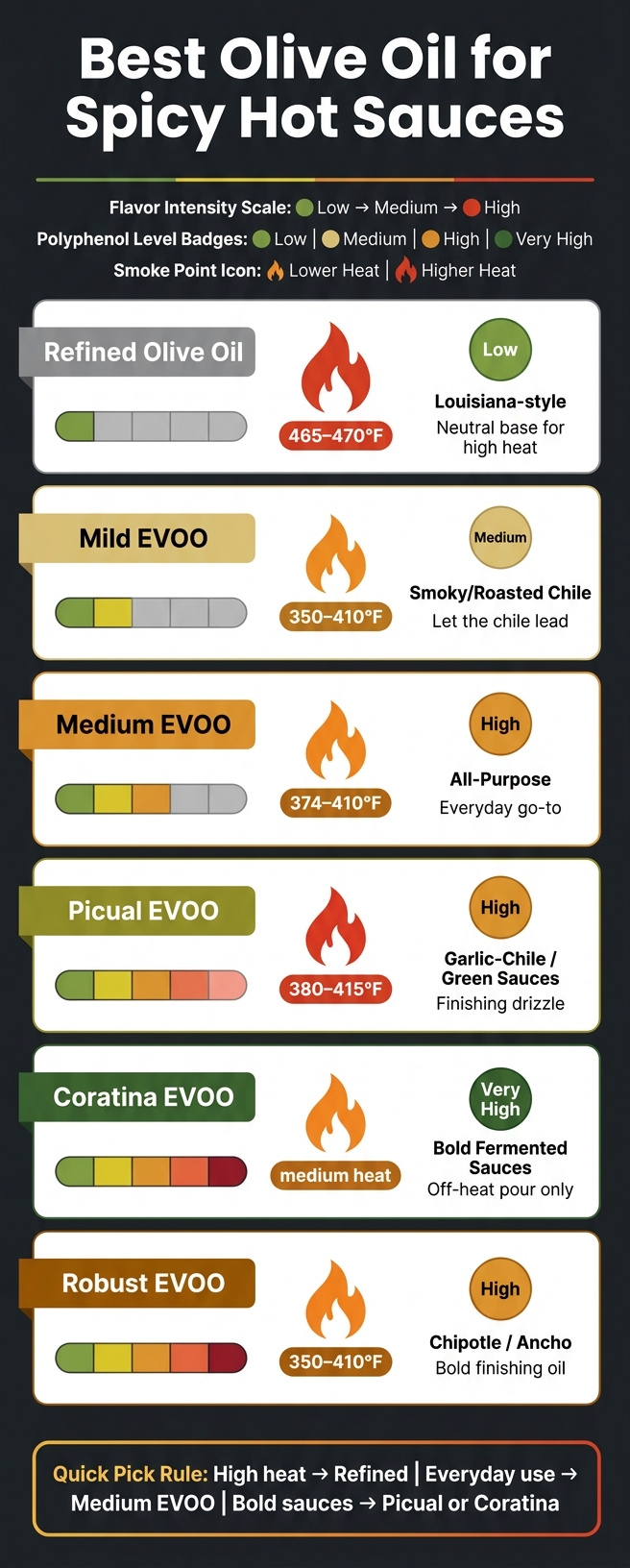
If I want the short answer: use refined olive oil for high heat, mild or medium EVOO for everyday hot sauce, and Picual or Coratina when I want a bolder olive taste.
Oil changes more than flavor. Because capsaicin dissolves in fat, the oil also changes how the burn feels and how long it stays on the palate. In this guide, I’d sort the options like this:
- Refined olive oil: best for hotter cooking, around 465–470°F
- Mild EVOO: best when I want the chile and vinegar to stay in front
- Medium EVOO: best middle-ground pick for daily use
- Picual EVOO: best for smoky, savory, roasted-chile sauces
- Coratina EVOO: best for sharp, bitter, peppery sauces with extra bite
- Strong EVOO styles overall: best as a finishing pour or in thick sauces
The main trade-off is simple: more olive character usually means more bitterness and peppery bite, while more heat tolerance usually means less flavor.
Quick Comparison
| Oil | Flavor impact | Heat use | Best fit |
|---|---|---|---|
| Refined olive oil | Very low | High heat | Chili oil, cooked sauces, neutral base |
| Mild EVOO | Low | Low to medium heat | Louisiana-style, fruit-forward, creamy sauces |
| Medium EVOO | Medium | Medium heat | Chipotle, serrano, daily-use sauces |
| Picual EVOO | Medium-high | Medium heat / finish | Roasted jalapeño, smoky glazes, savory sauces |
| Coratina EVOO | High | Medium heat / finish | Garlic-chile sauces, green hot sauces, bold blends |
If I’m picking fast, I ask just three things: How hot am I cooking? How much olive flavor do I want? And can the sauce handle bitterness?
Best Olive Oil for Hot Sauce: Flavor, Heat & Sauce Style Guide
Best Italian Chilli Oil (Peperoncino) Spicy Chili in Extra Virgin Olive Oil - Easy recipe from Italy
sbb-itb-4066b8e
1. Big Horn Olive Oil Picual Extra Virgin Olive Oil
Big Horn Olive Oil's Picual Extra Virgin Olive Oil is a bold, medium-robust EVOO that works well in sauces needing a green, peppery backbone. The flavor leans into green tomato leaf, artichoke, and fresh green herbs, followed by a peppery, slightly bitter finish. That peppery finish points to a high-phenolic, bold-style oil. Put simply, Picual gives chili-forward sauces structure instead of softness.
It also adds another peppery note to the heat, so the finish feels longer and more layered. In fruit-based sauces like mango-habanero or pineapple-serrano, Picual’s savory, slightly bitter edge helps keep sweetness under control. That matters, because sweet heat can go flat fast without something to balance it.
For cooking, Picual holds up well. Its smoke point typically falls between 380°F and 415°F. It also has a high level of polyphenols and monounsaturated fat, which helps it stay stable under heat. That makes it a strong pick for cooked sauces and hot oil infusions.
It fits best in bold, savory hot sauce styles, especially roasted jalapeño-garlic sauces and chipotle glazes. It also shines as a finishing oil after cooking or as a raw drizzle over buffalo wings, grilled shrimp tacos, or roasted vegetables. In those uses, its green, peppery lift plays nicely with the sauce’s heat.
Use a light hand in delicate sauces. Its bitter edge can take over softer flavors. If you want something darker and more forceful, the next oil pushes even further in that direction.
2. Big Horn Olive Oil Coratina Extra Virgin Olive Oil
Big Horn Olive Oil's Coratina Extra Virgin Olive Oil is a high-polyphenol olive oil with a bold bitter edge and a long peppery finish. If Picual feels green and structured, Coratina comes across as darker, sharper, and more assertive.
On the palate, Coratina brings artichoke, green almond, arugula, and fresh-cut grass, followed by a sharp, almost spicy finish. That peppery tail pairs neatly with chili heat, so the burn feels deeper and more layered instead of flat.
In hot sauce, Coratina can smooth out harsh heat and give the sauce a longer, more even burn. That's a big plus for cooked chilies, garlic oils, and sauces that need more backbone. It fits especially well in:
- Green jalapeño or serrano sauces
- Garlic-chili oil condiments
For cooking, use Coratina over medium heat, then add a finishing pour off heat to keep more of its aroma. Its high polyphenol content also helps with oxidative stability, which makes it a smart pick for chili oils and hot sauces stored for several weeks.
One thing to watch: its bitterness can take over in sweet sauces. In fruit-forward recipes, use less acid and a bit more salt to keep the balance in check. If this profile feels too intense, the next oils pull things back a notch.
3. Mild Extra Virgin Olive Oil
Where Coratina brings heat and bitterness to the front, mild EVOO hangs back. Mild refers to flavor, not quality. It still meets extra virgin standards. You just get a softer, buttery profile with low bitterness. That makes it a smart pick when the chile should do most of the talking and the oil should stay neutral.
After Coratina’s intensity, mild EVOO is the gentlest option in this group. On the palate, expect notes of ripe fruit, almond, and light sweet notes that do not compete with chiles. It carries heat without adding grassiness or bitterness. The burn feels rounder, smoother, and slower to build.
Its smoke point usually falls between 350–410°F, which works well for gentle sautéing and low simmering. For high-heat frying, skip it. Refined olive oil is the better choice.
Mild EVOO fits best in sauces where the chile leads and the oil follows, such as:
- fresh green sauces
- fruit-forward hot sauces
- creamy emulsions
It also works well as a clean finishing drizzle when you want very little olive flavor.
For the best result, add it off the heat to help keep its mild fruitiness intact. If you want more olive flavor and more structure, medium EVOO is the next step.
4. Medium Extra Virgin Olive Oil
After mild EVOO, medium EVOO gives you a bit more structure without taking over the chile. It sits nicely in the middle: noticeable fruitiness, balanced bitterness, and a light peppery finish. That mix helps the heat feel more even across the sauce, not harsh or jagged.
Because capsaicin binds to fat, medium EVOO helps spread chile heat more evenly through the sauce. The result is a smoother burn that feels better integrated, instead of a sharp spike that hits all at once.
Its smoke point is 374–410°F (190–210°C), which is enough for sautéing garlic, simmering peppers, and warming sauce bases. Go much past that range, and the fruitiness that makes medium EVOO useful starts to drop off.
It works well in serrano green sauces, cayenne sauces, roasted red pepper blends, and herb-forward chili oils. It also makes a good finishing drizzle over grilled vegetables, seafood, chicken, or tacos when you want a richer, more savory note.
For very high-heat styles like crispy chili oil, it’s better to use medium EVOO later as a flavoring or blending oil instead of the main cooking fat. Reach for it when you want balance: more character than a neutral oil, but less punch than a robust one. When a sauce needs more bite, the next oil moves into robust territory.
5. Robust Extra Virgin Olive Oil
Robust EVOO is the boldest kind of extra virgin olive oil. It brings strong bitterness, a green, grassy profile, and that familiar peppery finish from polyphenols like oleocanthal. And that peppery punch doesn’t just affect flavor. It also changes the way heat shows up in a sauce.
Capsaicin is fat-soluble, so robust EVOO helps spread it through the sauce more evenly. That means the heat tends to feel deeper and longer-lasting, not like a sharp hit that disappears fast.
Its smoke point is 350–410°F (177–210°C), which fits most hot sauce prep with room to spare. Sautéing garlic and chiles usually lands around 250–350°F, so you’re still in a safe zone. Aim for a light shimmer in the pan, not smoke, if you want to hold onto flavor and polyphenols.
Robust EVOO works best in thick, flavor-forward sauces where the oil is meant to be part of the final taste. Good fits include:
- harissa-style blends with roasted red peppers and cumin
- smoky chipotle or ancho sauces
- bold chili oils
It also works well as a finishing drizzle over grilled chicken or other plated spicy dishes. Adding it off the heat helps keep all of its character intact.
This oil is less suited to vinegar-heavy sauces or delicate green sauces, where the bitterness can take over fast. A smart place to start is 1–2 tablespoons of robust EVOO per 1 cup of blended peppers, then taste and adjust. If the sauce gets too bitter, add a little vinegar or roasted bell pepper. If you want less olive flavor and a cleaner base, refined olive oil is the next pick.
6. Refined Olive Oil
When you want olive oil’s function without much olive taste, refined olive oil is the go-to. The refining process removes most of the aroma and polyphenols, which leaves the oil far more neutral. In plain English: you don’t get much fruitiness, bitterness, or peppery finish. So if your chilies, garlic, and vinegar need to do the talking, this oil won’t interrupt.
Its biggest edge is the smoke point: roughly 465°F to 470°F (240°C to 243°C). That gives you more room when you’re sautéing aromatics, frying dried chiles, or toasting spices for hot sauce. The oil holds up well at medium-high to high heat without breaking down or bringing in scorched notes. If heat control matters more than olive taste, refined olive oil makes the most sense.
It also carries chili heat cleanly. That helps keep the pepper flavor sharp and direct, with the spices and acidity staying front and center.
Refined olive oil works best in smooth hot sauces, chili oils, and cooked sauces that need a neutral base. It’s also a smart pick for large batches when stability matters. The downside is simple: refining removes most of the polyphenols and antioxidant content. That trade-off stands out in the side-by-side comparison below.
How These Oils Compare by Flavor, Heat, and Sauce Style
The choice comes down to three things: flavor intensity, heat management, and sauce style.
Start with the sauce itself. If the sauce is bright and vinegar-forward, the oil should stay mostly in the background. Mild EVOO works well here. It softens the edges a bit without taking over. Medium EVOO does more. It brings light fruitiness and a soft peppery finish, which makes it a good fit for more balanced sauces. If you're making something bold and smoky, stronger oils like Big Horn Olive Oil's Picual and Coratina make more sense. They add herbal notes and a sharper peppery bite. Refined olive oil is the better pick when you need a more neutral base, especially for higher-heat cooking.
Flavor isn't the only thing at play. Oil also changes how heat feels on the palate. High-polyphenol EVOOs like Picual and Coratina can make a sauce seem hotter because of that peppery finish. Refined olive oil does something different. It adds body and smoothness, but without that extra peppery layer.
Cooking stage matters too. EVOO fits medium-heat cooking. Refined olive oil holds up better at higher heat. Picual and Coratina are best used off-heat, where their flavor has room to show up instead of getting cooked away.
Use the table below to match each oil to the sauce style where it works best.
| Hot Sauce Style | Typical Base | Recommended Oil Profile | Why It Works |
|---|---|---|---|
| Louisiana-style | Vinegar + cayenne + salt | Mild EVOO or refined olive oil | Keeps the vinegar-forward character; rounds heat without adding bitterness |
| Smoky Mexican chile sauce | Roasted/dried chiles + tomato + garlic | Medium EVOO or Picual EVOO | Picual's herbal, tomato-leaf notes echo roasted flavors without masking dried chile complexity |
| Fermented chili sauce | Fermented chiles + salt + garlic | Medium EVOO | Balances tangy acidity and heat; produces a smoother sauce |
| Creamy chili mayo or yogurt sauce | Mayonnaise or yogurt + chili + aromatics | Medium EVOO; Coratina for bold versions | Adds fruitiness and gentle pepperiness; Coratina intensifies heat in garlic-forward recipes |
| Chili oil or finishing drizzle | Infused oil + chili flakes or paste | Refined olive oil for infusing; Picual or Coratina for off-heat finishing | Refined oil tolerates higher infusion heat; bold EVOO as a drizzle adds peppery depth and aroma |
Those tradeoffs get easier to see when each oil's strengths and weak points are put next to each other.
Pros and Cons of Each Olive Oil Style
Here’s a fast way to pick the right oil for your sauce. Think about three things: flavor, heat tolerance, and how much olive taste you want in the final mix.
Some oils do a lot of heavy lifting. Others stay out of the way.
Picual and Coratina are the boldest options in this group. They bring peppery depth, higher polyphenols, and a strong finish. That’s great for sauces that need backbone. But there’s a catch: they can steamroll delicate peppers, fruit-based sauces, or clean vinegar-forward recipes.
Mild EVOO plays a quieter role. It supports the sauce instead of fighting for attention. Medium EVOO gives you a bit more fruit and structure, which makes it a good fit for everyday hot sauces and moderate-heat sautéing.
Refined olive oil handles heat best, but it doesn’t bring much flavor, aroma, or polyphenol content. It adds body and helps with heat. That’s about it.
| Oil | Main Pros | Main Cons | Best For | Avoid If |
|---|---|---|---|---|
| Big Horn Picual EVOO | Peppery, herbal depth; high polyphenols | Can overwhelm delicate peppers | Smoky, roasted-chile sauces; finishing drizzles | You want a clean, neutral base |
| Big Horn Coratina EVOO | Very high polyphenols; intense pungency | Too aggressive for fruit-based or sweet sauces | Bold fermented chili sauces; finishing oil | Sweet or citrus-forward recipes |
| Mild EVOO | Subtle fruitiness; supports other flavors | Gets lost in bold or fermented sauces | Everyday table sauces; cold green sauces | You want a peppery or bitter finish |
| Medium EVOO | Balanced flavor; versatile across sauce styles | Not suited for high-heat frying | All-purpose hot sauces; sweating aromatics before blending | You need strong olive character or near-neutral taste |
| Robust EVOO | Big peppery finish; high polyphenols | Bitterness can clash with fresh citrus or light herbs | Chipotle or ancho sauces; finishing over grilled meats | Wide-audience sauces where mild flavor is preferred |
| Refined Olive Oil | Neutral flavor; highest heat stability | Very low polyphenols; little aroma or complexity | High-heat chili oil infusions; single-pepper sauces | Olive flavor is meant to be part of the sauce |
Conclusion
There’s no one-size-fits-all olive oil for spicy hot sauce. The best pick depends on three things: flavor, olive intensity, and heat level.
Here’s the simple way to think about it:
- For high-heat chile infusions, refined olive oil makes the most sense. It stays neutral, so the pepper flavor stays front and center.
- For everyday spicy sauces, mild EVOO keeps the chile flavor in the lead, while medium EVOO adds more body and a peppery edge.
- For smoky, fermented, or chile-forward sauces, Picual and Coratina bring bold, peppery depth and work well as finishing oils.
FAQs
Can I mix refined olive oil and EVOO in one hot sauce?
It’s best to use pure extra virgin olive oil in hot sauce instead of blending it with refined olive oil or other oils.
Big Horn Olive Oil points out that high-quality, cold-pressed Ultra Premium EVOO helps keep the flavor, antioxidants, stability, and distinct character that make homemade condiments stand out.
How do I keep EVOO from making hot sauce taste bitter?
Avoid overheating the EVOO during infusion. Too much heat can scorch the oil and aromatics like garlic or dried peppers, which leaves you with a bitter taste instead of a clean, rich flavor. Keep the heat low and steady, ideally around 180°F.
If you're using fresh aromatics like garlic or shallots, take them out as soon as they turn golden. Leave them in too long, and they can burn fast. And if you're adding chilies, make sure they're completely dry before they go into the oil.
Which olive oil works best for fruit-based hot sauces?
For fruit-based hot sauces, Arbequina extra virgin olive oil is usually the best pick. It has a soft, fruity, mild taste that works well with sweet or delicate fruit notes instead of drowning them out.
Big Horn Olive Oil offers high-quality, cold-pressed Ultra Premium options that help keep the fresh taste you want when balancing bright fruit infusions.