

EVOO vs. Refined Oils: Triglyceride Impact
When it comes to managing triglyceride levels - a critical marker for heart and metabolic health - your choice of fresh, traceable olive oil matters. Extra virgin olive oil (EVOO) and refined oils differ significantly in their effects. EVOO retains antioxidants and polyphenols, which help lower triglycerides and improve fat metabolism, especially after meals. Refined oils, however, lose these beneficial compounds during processing and may contribute to higher triglyceride levels and inflammation.
Key Takeaways:
- EVOO: Cold-pressed, rich in antioxidants, promotes faster triglyceride clearance, and reduces post-meal fat levels.
- Refined Oils: Heavily processed, stripped of nutrients, linked to slower triglyceride clearance, and may increase arterial inflammation.
Quick Comparison:
| Factor | EVOO | Refined Oils |
|---|---|---|
| Processing | Minimal, cold-pressed | Extensive, includes bleaching/deodorization |
| Nutrient Content | High (polyphenols, antioxidants) | Low (loss of beneficial compounds) |
| Triglyceride Impact | Faster clearance, lower levels | Slower clearance, higher levels |
| Health Effects | Reduces inflammation | May increase inflammation |
Switching to EVOO for daily cooking or as a dressing can improve triglyceride management and support heart health. Incorporate 2 tablespoons per day and pair it with fiber-rich foods for better results.
Can olive oil lower triglycerides? | Olive Oil Fix
sbb-itb-4066b8e
What Are Triglycerides and Why Do They Matter?
To understand why your choice of cooking oil impacts heart health, it’s essential to grasp what triglycerides are and why they’re important.
Triglycerides are the most common type of fat in your blood. When you consume more calories than your body needs, your liver converts the excess into triglycerides, storing them in fat cells. Between meals, hormones signal these fat cells to release triglycerides for energy - a perfectly normal process. The problem begins when triglyceride levels stay elevated for too long.
Since triglycerides can’t dissolve in blood on their own, the liver wraps them in proteins to form lipoproteins, like very-low-density lipoproteins (VLDL). These lipoproteins transport triglycerides through your bloodstream to provide energy to cells. However, excessive circulation of these particles can lead to fatty deposits building up in your artery walls - a condition called atherosclerosis. This buildup increases the risk of heart attacks and strokes over time.
High triglycerides are also a key feature of metabolic syndrome, which includes high blood pressure, elevated blood sugar, and excess abdominal fat. Together, these factors significantly increase the risk of type 2 diabetes and heart disease. If triglyceride levels climb to 500 mg/dL or higher, they can even cause acute pancreatitis - a severe inflammation of the pancreas that can be life-threatening.
Here’s how triglyceride levels are classified for adults:
| Classification | Triglyceride Level | Risk Implications |
|---|---|---|
| Healthy / Normal | Below 150 mg/dL | Ideal for maintaining heart and vascular health over the long term. |
| Borderline High | 150–199 mg/dL | Linked to an increased risk of cardiovascular disease. |
| High | 200–499 mg/dL | Associated with atherosclerosis and metabolic syndrome. |
| Very High / Severe | 500 mg/dL or higher | Poses a high risk for acute pancreatitis and requires immediate attention. |
This is a widespread issue. About 1 in 4 adults in the U.S. has high triglyceride levels, and the number jumps to 42% among those aged 60 and older. What you eat - including the oils you use in cooking - directly affects your triglyceride levels. That’s why it’s so important to choose the right oils, setting the stage for exploring how EVOO and refined oils impact these levels.
How EVOO Affects Triglyceride Levels
Research shows that extra virgin olive oil (EVOO) can help lower triglyceride levels. Its benefits come from a mix of healthy fats, antioxidants, and bioactive compounds that work together to support better lipid profiles.
Nutritional Profile of EVOO
EVOO is packed with monounsaturated fatty acids (MUFAs), particularly oleic acid, which is its most abundant fat. MUFAs are known to reduce LDL cholesterol and promote heart health, especially when they replace saturated or trans fats in the diet. Additionally, EVOO has a high polyphenol content, which plays a critical role in fat metabolism. These polyphenols not only act as antioxidants but also improve how the body processes fats after meals. This benefit is largely absent in refined oils, as processing removes these valuable compounds.
Together, these nutrients contribute to healthier blood fat levels both during and after meals.
Fasting and Postprandial Triglycerides
While fasting triglyceride levels are often the focus during health checkups, postprandial triglycerides - the temporary rise in blood fats after eating - are becoming recognized as an important factor in conditions like atherosclerosis and metabolic syndrome. Here’s where EVOO stands out.
A 2021 study from Hospital Regional Universitario and IBIMA in Málaga, Spain, compared 25 mL (about 2 tablespoons) doses of EVOO, refined olive oil, and sunflower oil in both non-obese and morbidly obese individuals. The results were clear: EVOO increased insulin and GLP1 levels, reduced post-meal triglycerides, and lowered acylated ghrelin, speeding up triglyceride clearance.
"EVOO causes a higher increase of insulin and lower postprandial hypertriglyceridemia and free fatty acid levels than with OO [refined olive oil] and SO [sunflower oil]." - Molecular Nutrition & Food Research
This highlights how incorporating EVOO into meals can improve triglyceride control.
How Meal Composition Affects Triglyceride Outcomes with EVOO
The fats you pair with your meals make a difference. Replacing oils high in polyunsaturated fatty acids (PUFAs) - like sunflower oil - with EVOO can significantly lower post-meal triglycerides. Sunflower oil, for instance, has been shown to increase pro-inflammatory markers such as TNFα and IL6 after meals, while EVOO has the opposite effect, reducing inflammation.
"EVOO produces more beneficial effects than OO [refined olive oil], which has lower amounts of minor components, and SO [sunflower oil], which has PUFA as its main component." - Garcia-Serrano et al., Researchers
Making small changes, like swapping butter, shortening, or refined seed oils for EVOO in cooking, can have a meaningful impact on triglyceride levels. Even a modest serving of 2 tablespoons per meal is enough to trigger the positive gut hormone response observed in studies.
How Refined Oils Affect Triglyceride Levels
Refined oils, unlike EVOO, go through processes that strip away their nutritional benefits, directly influencing triglyceride metabolism and, by extension, cardiovascular health.
What Are Refined Oils?
Refined oils are subjected to industrial processes designed to remove impurities, odors, and pigments. These steps include degumming (eliminating phospholipids), neutralization (removing free fatty acids), bleaching (removing pigments), winterization (removing waxes), and deodorization (eliminating volatile compounds). For example, during bleaching, oils are heated to around 212°F, while deodorization takes temperatures up to 300°F–500°F. The end product is a neutral-tasting, long-lasting oil - but it comes at the cost of its original nutrients.
"Refining strips away most of the compounds that make high-quality olive oil special." - Erica Booth
This loss of nutrients plays a critical role in how refined oils interact with triglycerides in the body.
How Refining Reduces Antioxidants and Alters Nutritional Value
The intense heat and chemical treatments used during refining destroy sterols, tocopherols (vitamin E), and polyphenols - key compounds that support healthy fat metabolism. For instance, pomace olive oil, which retains more of these components than refined olive oil, contains nearly 5 times more tocopherols and about 30 times more triterpenic alcohols. These compounds aren't just "nice to have" - they actively help clear triglycerides from the bloodstream after meals.
Refined Oils and Their Effect on Triglycerides
The refining process doesn’t just remove beneficial nutrients; it also introduces harmful compounds. For instance, bleaching increases oxidized triglycerides, while deacidification and deodorization lead to the formation of polymeric triglycerides. A study analyzing 19 samples of refined vegetable oils found oxidized triglyceride levels ranged from 1.53% to 4.83%, with an average of 3.11%, while dimeric triglycerides ranged from 0.32% to 2.01%.
These altered triglycerides behave differently in the bloodstream. Refined oils are also linked to remnant particles - fragments of cholesterol and fatty acids - that contribute to arterial inflammation and plaque buildup. Research comparing refined olive oil with pomace olive oil highlighted that the absence of protective minor components in refined oil slowed triglyceride clearance after meals.
"Minor components of POMACE facilitated TG clearance from TRL by modifying their particle size and the hydrolysis of the most apolar species." - Rosana Cabello-Moruno et al., Nutrition Research
Here’s a quick breakdown of how each refining step impacts the oil’s composition:
| Refining Step | Impact on Composition |
|---|---|
| Bleaching | Increases oxidized triglycerides |
| Deacidification | Increases polymeric/dimeric triglycerides |
| Deodorization | Increases polymeric/dimeric triglycerides |
EVOO vs. Refined Oils: Side-by-Side Triglyceride Comparison
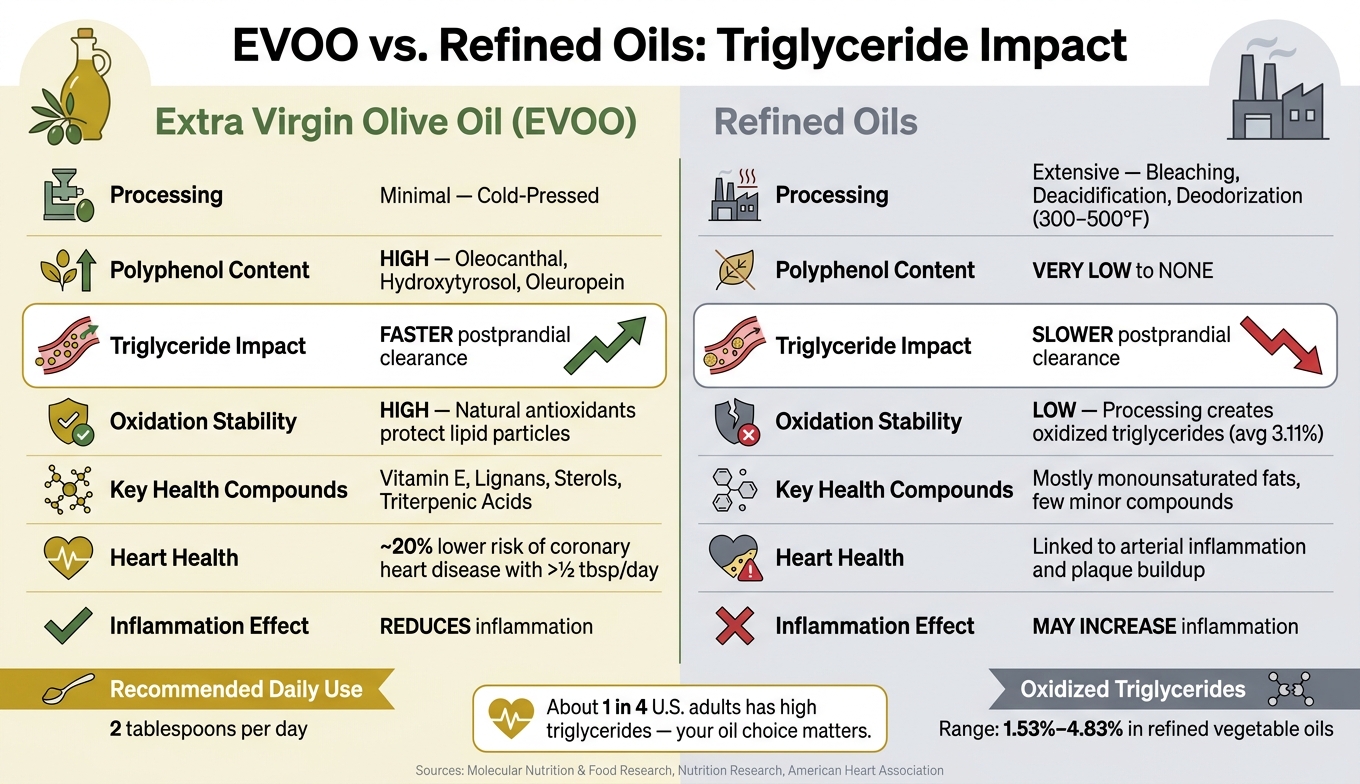
EVOO vs. Refined Oils: Triglyceride Impact Comparison
Let’s break down how extra virgin olive oil (EVOO) stacks up against refined oils when it comes to triglycerides and heart health. The key difference lies in how they’re processed - and the compounds they retain (or lose) along the way.
EVOO is cold-pressed, which means it keeps its natural polyphenols, tocopherols, and sterols intact. These compounds play a big role in clearing postprandial triglycerides (the fats in your blood after eating). Refined oils, on the other hand, go through heavy processing - bleaching, deacidification, and deodorization - that strips away nearly all these beneficial components.
Here’s what research has to say:
"Minor components of olive oil facilitate the triglyceride clearance from postprandial lipoproteins in a polarity-dependent manner in healthy men." - Rosana Cabello-Moruno et al., Nutrition Research
EVOO’s antioxidants also help protect against oxidative damage, something refined oils can’t offer due to their lack of these protective compounds.
Comparison Table: EVOO vs. Refined Oils
| Factor | Extra Virgin Olive Oil (EVOO) | Refined Oils |
|---|---|---|
| Processing Level | Minimal; cold-pressed | Extensive; includes bleaching and deodorization |
| Polyphenol Content | High; rich in oleocanthal, hydroxytyrosol, and oleuropein | Very low to none |
| Triglyceride Impact | Promotes faster postprandial triglyceride clearance | Slower clearance due to lack of active compounds |
| Oxidation Stability | High; natural antioxidants protect lipid particles | Low; processing leads to oxidized triglycerides |
| Typical Meal Use | Best for dressings, dipping, and low-to-medium heat cooking | Suitable for high-heat frying and sautéing |
| Key Health Compounds | Oleocanthal, vitamin E, lignans, sterols, triterpenic acids | Mostly monounsaturated fats, few minor compounds |
Adding to its benefits, consuming just over half a tablespoon of olive oil daily has been linked to a nearly 20% lower risk of coronary heart disease. This makes EVOO a smart choice for improving triglyceride clearance and supporting overall heart health.
How to Use EVOO in Everyday Meals for Better Triglyceride Control
Understanding that EVOO can help with triglyceride clearance is one thing - making it a regular part of your meals is another. Research suggests that 2 tablespoons of EVOO daily can improve lipid profiles, but the key is using it to replace less healthy fats in your diet for meaningful changes.
Adding EVOO to Your Diet
Replace butter, lard, or refined oils with EVOO in your cooking. Drizzle it over roasted vegetables, mix it into salads, or add a light pour to soups. Using EVOO in raw or low-heat recipes helps preserve its polyphenols, as high-heat cooking can reduce antioxidant levels by 30–40%.
Pairing EVOO with fiber-rich foods can amplify its benefits for triglyceride control. For example, try lentils with EVOO and lemon, a grain bowl with brown rice and an EVOO-based dressing, or sautéed leafy greens finished with a drizzle of EVOO. Since many adults in the U.S. consume less than the recommended 25–30 grams of fiber daily, these combinations can help improve both lipid levels and digestive health.
At the same time, cutting back on refined carbohydrates like white bread, sugary drinks, and white rice is essential. These foods are quickly converted into triglycerides by the liver. Swapping them for whole grains and using EVOO as your go-to fat creates a more balanced approach to managing triglycerides.
"Focus on eating foods with fiber or healthy fats while limiting unhealthy fats." - Ashish Sarraju, MD, Cardiologist
Consistent use of EVOO can lead to noticeable improvements in lipid levels within 4–8 weeks, so sticking with it is worth the effort.
For the best results, choose a high-quality EVOO.
Big Horn Olive Oil: A Source of High-Quality EVOO
Not all EVOO products are created equal - freshness and polyphenol content can vary widely. Big Horn Olive Oil specializes in Ultra Premium EVOO that is cold-pressed within 2 hours of harvest and delivered within 3 months. This quick turnaround preserves the polyphenols that are crucial for triglyceride control, as these compounds degrade over time.
Their selection includes single-source options like Picual and Coratina Extra Virgin Olive Oils, both known for their high antioxidant levels, as well as an Estate Reserve Ultra Premium EVOO. Prices start at $8.99, making it accessible for anyone looking to incorporate fresh, high-quality EVOO into their daily routine. By choosing a premium EVOO, you ensure you're getting the active compounds that make a real impact.
Conclusion: Why EVOO Is the Better Choice for Triglyceride Health
Extra virgin olive oil (EVOO) stands out as a better option than refined oils for managing triglycerides. While refined oils lose important compounds during processing, EVOO keeps its beneficial elements intact, helping the body clear triglycerides more effectively. Plus, it has an added benefit: it supports better lipoprotein particle size, which helps your body break down and eliminate fat more efficiently.
Research backs this up:
"EVOO resulted in a more substantial reduction in both total cholesterol... and triglycerides... surpassing the effects of VCO." - Dwi Ashariyanti Hakim, Universitas Muslim Indonesia
For the best results, consider fresh, cold-pressed EVOO like those available from Big Horn Olive Oil. Their Ultra Premium EVOOs, including antioxidant-rich varieties like Picual and Coratina, are affordable, starting at just $8.99. This makes EVOO an accessible option for daily use, not just a luxury.
Switching to a high-quality EVOO, such as the ones offered by Big Horn Olive Oil, is a simple and effective step toward better triglyceride management.
FAQs
How much EVOO should I use daily to help triglycerides?
Using 1 to 4 tablespoons (15–60 ml) of extra virgin olive oil (EVOO) each day, particularly as a substitute for less healthy fats like butter or refined oils, may help lower triglyceride levels. Adding EVOO to your meals is an easy way to promote heart health and improve overall wellness.
Is EVOO still healthy if I cook with it at high heat?
Extra virgin olive oil (EVOO) holds up well under high heat. Its high smoke point, stable fatty acid composition, and antioxidant content work together to resist heat damage. These qualities help reduce the creation of harmful compounds during cooking, making EVOO a safe and nutritious option even when used at elevated temperatures.
How fast can triglycerides improve after switching from refined oils to EVOO?
Studies indicate that switching from refined oils to extra virgin olive oil (EVOO) can lead to noticeable improvements in triglyceride levels within about 14 days. Consistently incorporating EVOO into your diet during this time may help reduce triglycerides and support better overall lipid profiles.