

How Balsamic Vinegar Elevates Festive Mediterranean Dishes
Balsamic vinegar is a key ingredient in Mediterranean cooking, adding depth, sweetness, and tanginess to both savory and sweet dishes. Its versatility makes it perfect for festive recipes, from marinades and glazes to finishing drizzles. Here's what you need to know:
- Types of Balsamic: Younger balsamics are great for dressings and marinades, while aged ones like 25-year dark balsamic are best for finishing dishes due to their rich, concentrated flavor.
- Cooking Uses: Use balsamic for vinaigrettes, roasted vegetables, marinades, and even desserts like gelato or fruit.
- Tips for Use: Combine with olive oil for balance, reduce carefully for glazes, and drizzle aged balsamic sparingly to avoid overpowering dishes.
Premium balsamic, like those from Modena, Italy, can transform simple ingredients into standout dishes. From appetizers to desserts, it pairs beautifully with meats, cheeses, vegetables, and fruits.
Balsamic Vinegar: A Mediterranean Kitchen Staple
Balsamic vinegar has been a cornerstone of Mediterranean cooking for centuries, celebrated for its ability to add richness, brightness, and depth to a variety of dishes. Its versatility makes it a must-have ingredient in modern kitchens, especially for festive Mediterranean recipes.
What Sets Traditional Balsamic Apart
Traditional balsamic vinegar is crafted from cooked grape must (mosto cotto), a process that begins with simmering the must in open vessels for 12–24 hours. This reduces the liquid to about 30% of its original volume, concentrating its natural sugars and flavors. The reduced must is then aged in a batteria, a series of wooden barrels made from oak, cherry, chestnut, and juniper. Each type of wood contributes unique characteristics: chestnut adds tannins, cherry lends a subtle sweetness, and juniper imparts a faintly resinous note.
The aging process is what truly defines traditional balsamic vinegar. To earn the coveted DOP (Protected Designation of Origin) label, the vinegar must age for at least 12 years. For the Extravecchio designation, a minimum of 25 years is required. This extensive aging results in a thick, syrupy vinegar with a complex balance of sweet and tart flavors. Chef Francesco Mazzei captures its essence perfectly:
"A gastronomic treasure... like the truffle or caviar of the vinegar world: expensive, concentrated, and transformative in small quantities."
With only about 14,000 liters of traditional DOP balsamic vinegar produced annually, it remains one of the culinary world's most exclusive delights. Its intricate flavor profile is a natural fit for enhancing the vibrant flavors of Mediterranean cuisine.
Why Balsamic Works Well with Mediterranean Ingredients
Balsamic vinegar’s sweet-tart character makes it a perfect complement to the richness of Mediterranean dishes. It balances the fat in extra virgin olive oil, aged cheeses, and proteins like lamb or grilled fish, ensuring flavors remain harmonious. It also elevates fresh produce - roasted carrots and squash develop deeper caramelization, while stone fruits taste sweeter and more vibrant.
Choosing the right type of balsamic is key. Lighter, younger varieties work best for marinades and dressings, adding brightness without overwhelming other ingredients. On the other hand, thicker, aged balsamics are ideal for finishing dishes. Just a few drops can enhance the aroma and complexity of warm foods, making them more memorable.
Big Horn Olive Oil's Balsamic Vinegars
When preparing festive Mediterranean dishes, high-quality balsamic vinegar can make all the difference. Big Horn Olive Oil sources its balsamic vinegars directly from Modena, Italy - the heart of traditional balsamic production. Their collection includes classic dark balsamics and infused varieties, perfect for a range of culinary needs. Whether you’re looking for an aged option to add bold, concentrated flavor or an everyday balsamic for vinaigrettes and marinades, Big Horn Olive Oil offers an authentic way to bring the craftsmanship of Modena to your table.
sbb-itb-4066b8e
How to Use Balsamic Vinegar in Festive Cooking
Balsamic vinegar’s distinct flavor makes it a versatile ingredient for everything from dressings to finishing drizzles. A good rule of thumb: use aged, high-quality balsamic for finishing touches, while PGI (Protected Geographical Indication) balsamic from Modena works well for everyday tasks like dressings, glazes, and marinades. Below are some practical ways to bring out the best in your festive dishes with balsamic vinegar.
How to Make a Simple Balsamic Vinaigrette
A basic balsamic vinaigrette is easy to whip up and works well with a variety of salads and appetizers. Start by combining 3 parts extra virgin olive oil with 1 part balsamic vinegar - for example, 3 tablespoons olive oil to 1 tablespoon balsamic. Whisk in a small spoonful of Dijon mustard, a minced garlic clove, plus salt and black pepper to taste.
If you’re working with bitter greens like radicchio or kale, consider adding a bit more balsamic to balance their sharpness. For lighter greens or seafood dishes, use more olive oil for a milder finish. Pairing a peppery olive oil with a sweeter balsamic creates a dynamic flavor that enhances the dressing.
How to Make a Balsamic Glaze
A balsamic glaze is a must-have for festive cooking. To make one, combine 2 cups of PGI balsamic vinegar with ¼ cup of brown sugar in a stainless steel saucepan. Heat over medium until the sugar dissolves, then bring it to a gentle boil. Lower the heat and let it simmer for 20–30 minutes, whisking regularly, until the liquid reduces by half.
Here’s a tip to get the perfect consistency:
"Reduce balsamic until it coats the spoon lightly. Stop there. If you wait for syrup in the pan, you'll often get taffy on the plate." - Learn Olive Oil
Remove the glaze from the heat while it’s still slightly runny - it will thicken as it cools. Store it in an airtight container in the fridge, where it will last up to a month. For a festive spin, simmer the glaze with a cinnamon stick or star anise, then strain before storing.
How to Build a Balsamic Marinade
When marinating meats or vegetables, a balsamic aged at least 60 days works best due to its higher acidity, which helps tenderize the food. A simple yet effective marinade includes balsamic vinegar, extra virgin olive oil, garlic, black pepper, and fresh herbs like rosemary or thyme. The olive oil ensures even coating while preventing the balsamic from concentrating too much on the surface.
Use just enough marinade to coat the food - too much liquid can lead to steaming instead of caramelizing. This method works beautifully with chicken thighs, pork, portobello mushrooms, eggplant, and red onions. It’s a great starting point for dishes where balsamic’s natural reduction enhances the flavors even further.
Using Balsamic as a Finishing Drizzle or Pan Sauce
Balsamic vinegar also shines as a finishing touch. After roasting lamb, beef, or root vegetables, deglaze the hot pan with a splash of PGI balsamic, scraping up the flavorful browned bits. The vinegar quickly reduces into a glossy, concentrated sauce.
For a simple finishing drizzle, a few drops of aged balsamic over warm dishes - like roasted carrots, a cheese board, or even vanilla gelato - can add depth without overwhelming the flavors. Chef Anna Iazzetta from 0059 Food Lab shares her favorite pairings:
"I particularly love pairing it with scallops... or even on lemon gelato to create a licorice aftertaste."
A small drizzle of well-aged balsamic can elevate a dish, making it feel complete and balanced.
Pairing Balsamic Vinegar with Festive Mediterranean Dishes
Balsamic vinegar isn’t just for dressings - it can elevate every course of your festive menu. Let’s explore how this versatile ingredient can shine in appetizers, main courses, sides, and desserts.
Appetizers and Mezze
Balsamic vinegar adds a bright, tangy note to appetizers, complementing the salty richness of olives, capers, and cheeses. As The Little Shop of Olive Oils explains:
"Adding a splash of balsamic vinegar gives balance - just enough acidity to brighten the briny richness without overpowering." - The Little Shop of Olive Oils
Want a show-stopping starter? Roast seedless red grapes or fresh figs at 400°F with balsamic glaze and herbs like rosemary or thyme until they’re soft and jammy. Spoon them over whipped ricotta or burrata on crisp crostini. For extra flair, drizzle honey-balsamic syrup over the top - this simple glaze, simmered until thick, can be made up to three days ahead.
Here are a few mezze ideas where balsamic takes the spotlight:
| Mezze Dish | Application | Key Pairings |
|---|---|---|
| Warm Marinated Olives | Drizzle after heating | Garlic, rosemary, red pepper flakes |
| Burrata Crostini | Honey-balsamic glaze | Fresh figs, prosciutto, toasted pistachios |
| Whipped Ricotta Dip | Roasted fruit topping | Red grapes, thyme, honey-salted crostini |
| Olive Tapenade | Mixed into the spread | Balsamic fig spread, capers, anchovies, lemon whipped feta |
These starters highlight the balance balsamic brings to Mediterranean flavors. From here, it transitions seamlessly into main dishes, where it enhances meats and seafood.
Main Courses
For cooking, use PGI balsamic, but save aged PDO balsamic for finishing touches. Poultry and pork benefit from balsamic marinades mixed with olive oil, creating a caramelized crust during roasting. For red meats like roast beef or pork tenderloin, drizzle aged balsamic after resting - heat can diminish its delicate flavor notes.
Seafood is another surprising area where balsamic shines. A balsamic-and-olive-oil emulsion transforms smoked salmon or seared tuna into something unforgettable. Or, try glazing salmon with balsamic or serving grilled fish alongside onions caramelized in balsamic vinegar. This sweet-tart combination adds depth and reinforces the lively, layered flavors of Mediterranean cuisine.
Pair these main dishes with sides that also benefit from balsamic’s versatility.
Side Dishes and Grains
Balsamic vinegar can elevate even the simplest side dishes. Toss root vegetables - like carrots, beets, or parsnips - with olive oil and balsamic before roasting to enhance their natural sweetness. Grain salads featuring farro, freekeh, or lentils also come alive with a light balsamic vinaigrette, especially when paired with roasted cherry tomatoes, fresh herbs, and crumbled feta.
For a straightforward yet flavorful potato dish, drizzle roasted baby potatoes with balsamic glaze and sprinkle with fresh rosemary. The heat from the oven helps the glaze cling beautifully, making this an easy, crowd-pleasing side.
Desserts and Sweet Pairings
Balsamic vinegar, especially aged or infused varieties, adds an unexpected twist to desserts. Its acidity sharpens sweetness and enhances the natural flavors of fruits and dairy. Strawberries taste juicier, peaches more fragrant, and figs take on a candy-like quality.
For a festive dessert with minimal effort, drizzle aged balsamic over vanilla gelato or panna cotta. Pastry Chef Nicola Olivieri of Olivieri 1882 even pairs it with panettone:
"When we combined [balsamic and panettone], we discovered that the gentle acidity and aromatic depth of the balsamic perfectly enhanced the sweetness and richness of the dough."
When serving, use a spoon to create elegant zigzags or a dropper for precise dots. A sprinkle of flaky salt or candied walnuts can add a finishing touch. For desserts, look for balsamic with grape must as the first ingredient - it’s thicker and sweeter, making it ideal for these applications.
From appetizers to desserts, balsamic vinegar brings depth and harmony to your festive Mediterranean menu. Its ability to balance sweetness, richness, and acidity makes it a true standout ingredient.
How to Pick the Right Balsamic Vinegar for Festive Cooking
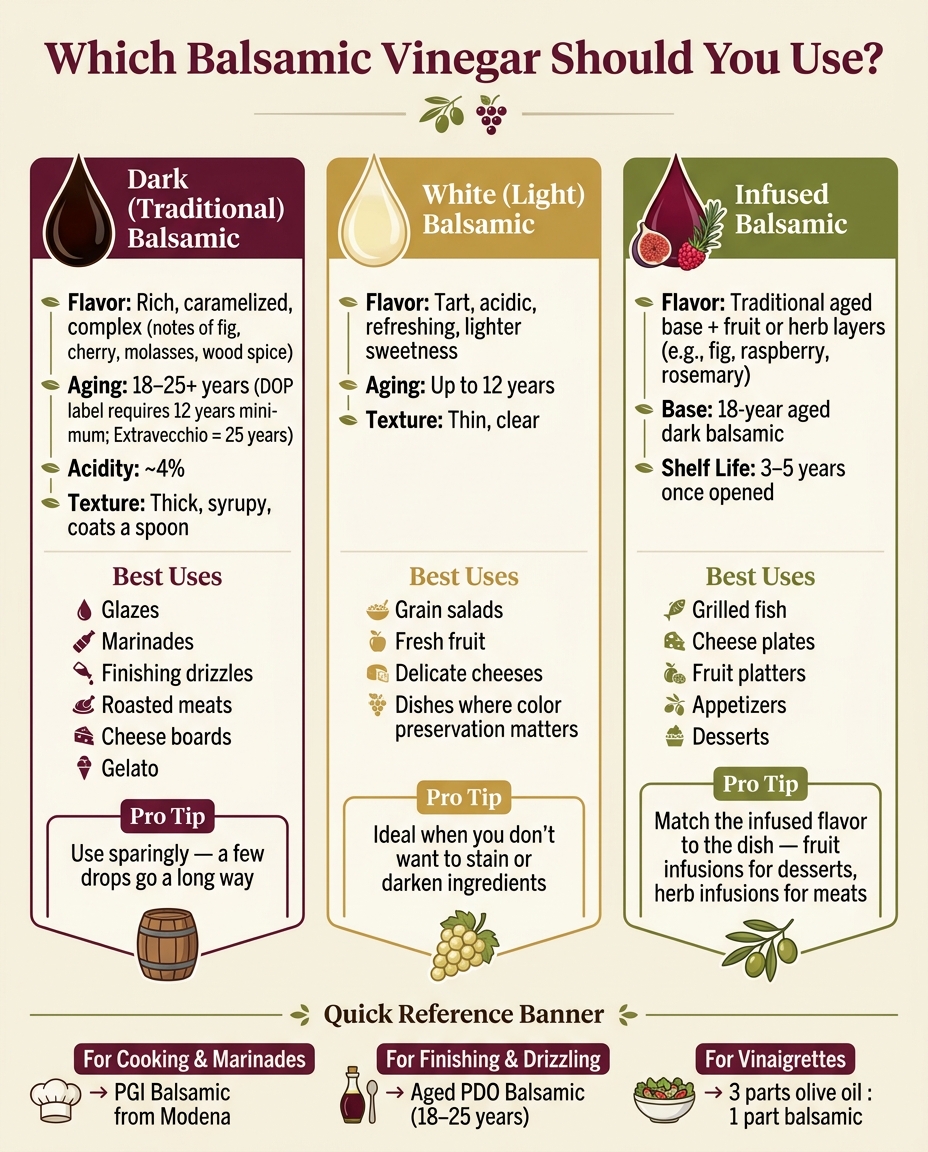
Dark vs. White vs. Aged Balsamic Vinegar: Which to Use & When
Balsamic vinegar comes in many varieties, each offering unique flavors and appearances. Choosing the right type - whether dark or light, aged or infused - can make a big difference in both the taste and presentation of your holiday dishes.
Dark vs. Light Balsamic Vinegar
The main differences between dark and light balsamic vinegar lie in their flavor profiles and color. Dark balsamic vinegar is cooked until it develops a caramelized sweetness and a rich, glossy hue. It's perfect for glazes, marinades, or drizzling over roasted vegetables and meats. White balsamic vinegar, on the other hand, has a tart and refreshing flavor, making it a great choice for dishes where you want to keep the ingredients' natural colors intact. Think grain salads, fresh fruit, or delicate cheeses.
| Feature | Dark Balsamic | White (Light) Balsamic |
|---|---|---|
| Flavor | Rich, caramelized, complex | Tart, acidic, refreshing |
| Aging | 18+ years (traditional) | Up to 12 years |
| Best Uses | Glazes, marinades, meats | Salads, fruits, light dishes |
| Visual Impact | Deep, dark color | Clear, preserves ingredient color |
By understanding these differences, you can tailor your choice to complement the flavors and appearance of your festive dishes.
When to Use Aged Balsamic Vinegar
Aged balsamic vinegar is a treasure for finishing dishes, not for high-heat cooking. Its long aging process develops complex flavors like fig, cherry, molasses, and wood spice. A simple drizzle of this vinegar can transform a dish into something extraordinary.
"Traditional aged balsamic is best enjoyed raw, lightly drizzled, [and] minimally disturbed." - Stefan & Sons
Big Horn Olive Oil offers some standout options for aged balsamic vinegar. Their Traditional 18-Year Aged Dark Balsamic Vinegar (375 ml), priced at $8.99, has a density of 1.28+ and 4% acidity - thick enough to coat a spoon and rich enough to shine on its own. For extra-special occasions, their Molto Denissimo 25-Year Aged Dark Balsamic Vinegar ($12.99) delivers even deeper flavors and pairs beautifully with gourmet ingredients like Parmigiano Reggiano, fresh figs, or even vanilla gelato.
"Whether you're finishing a chicken breast coming off the grill, or just want to enjoy a good bread dip, Big Horn's Traditional 18-year-old balsamic vinegar is the perfect start." - Big Horn Olive Oil
With aged balsamic, a little goes a long way, and it’s a simple way to elevate any dish.
Cooking with Infused Balsamic Vinegars
Infused balsamic vinegars take the traditional 18-year aged dark base and add layers of flavor with fruits or herbs. These vinegars are excellent for enhancing grilled fish, cheese plates, or fruit platters. The trick is to pair the infused flavor with your dish - fruit-infused varieties are fantastic in appetizers and desserts, while herb-infused options are ideal for roasted meats and grain salads.
Plus, infused balsamic vinegars have a shelf life of three to five years once opened, giving you plenty of time to experiment with their versatility.
Conclusion: Getting the Most Out of Balsamic Vinegar in Festive Mediterranean Cooking
Balsamic vinegar has a way of transforming holiday dishes into something extraordinary. Whether you're mixing it into a vinaigrette, reducing it for a glaze, using it in a marinade, or finishing a dish with a delicate drizzle, each approach brings its own charm to the table.
To truly make the most of balsamic vinegar, remember this key tip: buy better, use less. A small amount of high-quality balsamic - especially one aged 18 to 25 years - can deliver a glossy texture, subtle sweetness, and complexity that cheaper options simply can't replicate. Premium balsamics, like those offered by Big Horn Olive Oil, embody the heart of Mediterranean tradition. Picture it: a drizzle over roasted Brussels sprouts, a splash in a grain salad, or even a touch on vanilla ice cream paired with fresh strawberries.
It's also smart to have more than one type of balsamic on hand. Use an everyday balsamic for reductions and marinades, saving the aged or infused varieties for finishing dishes. And when making a vinaigrette, aim for an approximate 3:1 ratio of olive oil to balsamic vinegar - this keeps the flavors balanced and harmonious.
As Big Horn Olive Oil explains:
"Our Traditional 18-Year Aged Italian Dark Balsamic Vinegar is carefully crafted in limited quantities... resulting in an unparalleled depth and complexity."
Lastly, always trust your taste buds. Add balsamic little by little, starting with a teaspoon at a time, and tweak with salt or olive oil as needed to balance the acidity. With these tips, your festive dishes will radiate Mediterranean flair and flavor.
FAQs
How do I know if a balsamic is truly aged?
To spot authentic aged balsamic vinegar, start by checking for Traditional Balsamic Vinegar (PDO) certification. This variety is made exclusively from 100% cooked grape must and must age for at least 12 years. PDO bottles often use cap colors to indicate age: a white cap signals 12 years, while a gold cap represents 25 years of aging.
For PGI-certified balsamic vinegar, look for the PGI logo and neck seals. A gold seal typically suggests longer aging. Additionally, ensure the product originates from Modena or Reggio Emilia, as these are the recognized regions for genuine balsamic vinegar.
Can I substitute aged balsamic for cooking in a recipe?
When it comes to balsamic vinegar, the choice depends on both the recipe and the vinegar's quality. Traditional aged balsamic (labeled DOP) shines as a finishing touch for dishes like Parmesan cheese, fresh strawberries, or even gelato. Its nuanced flavor can lose depth when exposed to heat, so it's best reserved for uncooked applications.
For cooking, marinating, or creating reductions, younger or IGP balsamic varieties are a better fit. They bring the right mix of acidity and flavor to heat-based recipes without compromising their overall quality.
What’s the best way to balance balsamic with olive oil and salt?
For a classic vinaigrette, stick to the basics: a 3:1 oil-to-vinegar ratio is a solid starting point. Prefer a tangier kick? Go for 2:1 instead. When it comes to bread dipping, a 1:1 balance works beautifully.
Using a high-quality Ultra Premium Extra Virgin Olive Oil from Big Horn Olive Oil can mellow out the sharpness of balsamic vinegar. Add a pinch of salt to bring out the best in both flavors. Feel free to tweak the ratios based on your ingredients - stronger oils complement sweeter balsamics, while lighter oils shine with brighter, more zesty vinegars.