Study Summary: Olive Oil Tourism in Spain
Olive oil tourism in Spain connects mill visits, tastings, and local food - but visitor interest does not prove farm profit. In one Andalusia study, 48.3% of respondents named visiting an oil mill as their main reason for coming. Before booking, check what the tour includes; when buying Arbequina extra virgin olive oil online, check its origin, harvest date, producer, and ingredients.
Research from Extremadura and Andalusia points to three main takeaways:
- Visitors want to learn, taste, and buy. Regional food and time with producers also help shape the trip.
- Tourism can add income sources. Tours, bottle sales, meals, and lodging may support rural businesses, but the studies do not establish net returns.
- Survey findings have limits. Small or location-based samples, satisfaction scores, and plans to return do not measure nationwide demand or completed purchases.
The shopping lesson is simple: use product records to check claims. Tourism research does not prove that online buyers will spend more.
Inside Spain’s Olive Oil Capital | Harvest & Taste in Priego de Córdoba
Explore more educational videos about olive oil production and culture.
sbb-itb-4066b8e
Why Visitors Choose Olive Oil Tourism
Visitors come to learn about olive oil, buy it, and get to know the region. Across the studies, understanding production is the main draw, followed by tasting and buying oil, then enjoying the landscape and local food customs. That mix explains why tours combine production, tasting, and activities tied to the area.
Tours, Tastings, and Meeting Producers
In a 2018 Andalusia demand study, 48.3% of respondents named visiting an oil mill as their main motivation - a clear interest in seeing how olive oil is made. A separate Jaén study linked visitors’ motivations to curiosity, specialized knowledge, local customs, and connecting with people.
Before booking, check whether the visit includes production explanations, a guided tasting, time to talk with producers, or access to the groves. Confirm harvest participation separately.
Olive Oil Tourism and Food Travel
Local food can turn an olive oil visit into a regional trip. Cuisine is a primary draw, not an extra. A 2019 survey of 208 tourists in La Serena, Extremadura, found that local cuisine had the highest destination-motivation mean score at 4.79. Learning about EVOO culture followed at 4.64, then traveling with family and friends at 4.63. These averages apply only to that study; they aren’t percentages or national rankings.
The Andalusia demand research also listed getting to know the area, learning about olive oil, and eating and drinking the region’s customary products among the leading reasons for visiting. Together, these findings show how tasting, local cuisine, and learning about production fit into a regional food trip.
These motives also shape what visitors spend on once they arrive.
Rural Spending and Farm Income Sources
Olive Oil Tourism: Visitor Ratings vs. Farm Profit
Visitor Spending and Producer Income
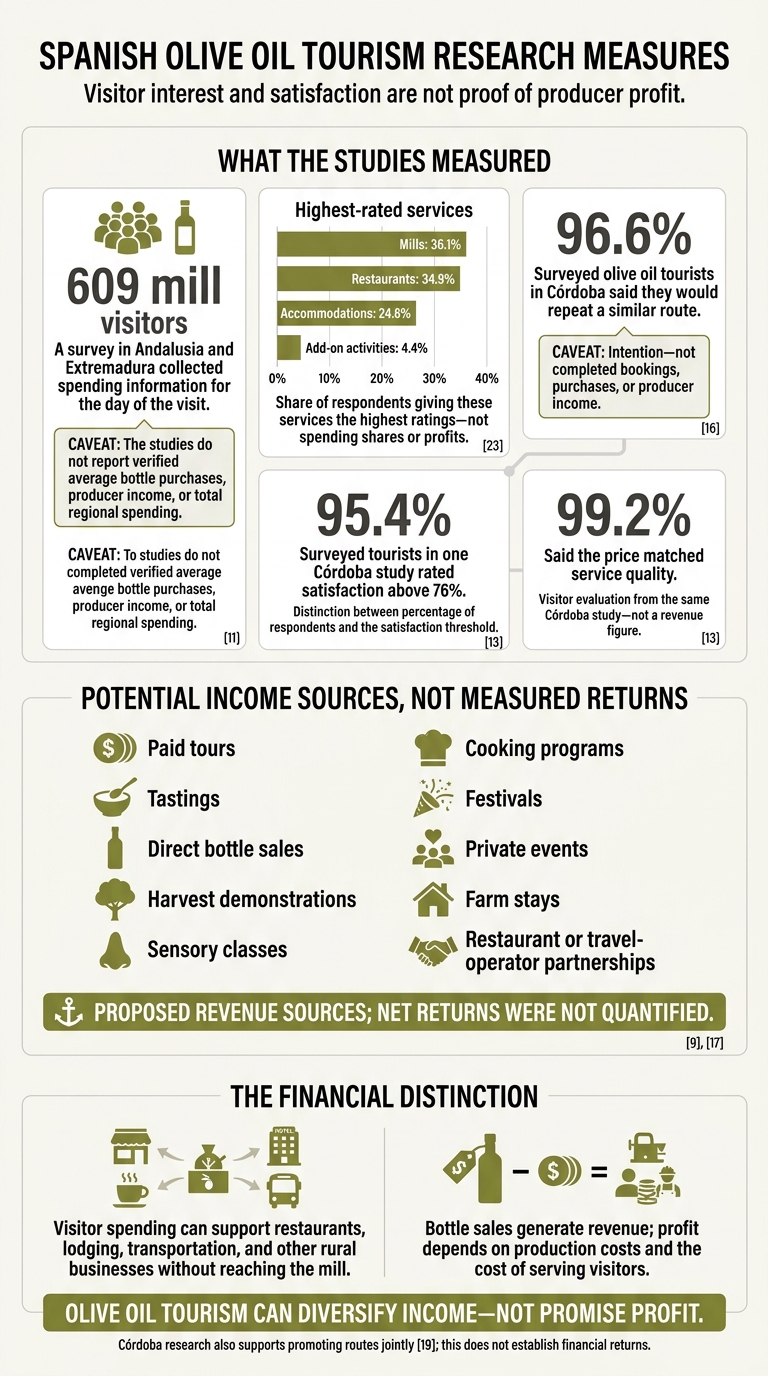
Visitor spending is not the same as farm income. Spending on meals, lodging, and transportation can support rural businesses without reaching the mill. Bottle sales bring in revenue, but profit depends on production costs and the cost of serving visitors.
The studies track visitor spending separately from farm income:
| Evidence label | Reported finding or income source | What the evidence establishes | Source |
|---|---|---|---|
| Measured results | A survey of 609 mill visitors in Andalusia and Extremadura collected spending information for the day of the visit. | The studies do not report verified average bottle purchases, producer income, or total regional spending. | |
| Measured results | Mills received the highest ratings from 36.1% of respondents; restaurants from 34.9%; accommodations from 24.6%; and add-on activities from 4.4%. | These figures identify the highest-rated services - not spending shares or profits. | |
| Proposed revenue sources | Paid tours, tastings, direct bottle sales, harvest demonstrations, sensory classes, cooking programs, festivals, private events, farm stays, and restaurant or travel-operator partnerships. | Net returns were not quantified. | |
| Evidence limits | In Córdoba, 96.6% of surveyed olive oil tourists said they would repeat a similar route. | This measures intention, not completed bookings, purchases, or producer income. |
Regional Food, Heritage, and Tourism Routes
Olive oil visits often lead to spending on local food, lodging, and heritage stops. Research in Córdoba also supports promoting routes jointly.
High satisfaction points to the potential for repeat visits, but it does not prove profit. In one Córdoba study, 95.4% of surveyed tourists rated satisfaction above 76%, and 99.2% said the price matched service quality. These are visitor evaluations, not revenue figures.
Origin, how recently the oil was produced, and contact with producers also matter to online buyers.
What the Research Means for Online Shoppers
Tourism research points to details worth checking on product pages: origin, harvest, producer identity, and flavor notes. But it doesn’t prove higher online sales or a willingness to pay more. In Córdoba, learning about olive oil scored 3.68 out of 5 as a visitor motivation.
Origin, Harvest, and Flavor Details
Keep verifiable facts separate from tasting descriptions when comparing bottles online.
| Shopping check | Product information to check | Evidence to look for |
|---|---|---|
| Origin | Country, region, cultivar, estate, or mill | Current product documentation |
| Producer | Named producer or cooperative; lot number or batch records | Producer name and batch records |
| Harvest and milling | Harvest date, extraction method, time between harvest and milling, filtration | Harvest date and process details |
| Flavor | Aroma, bitterness, pungency, and intensity | Label descriptions |
| Food pairings | Pairings and recipes | Serving guidance |
| Rural support | Farm relationships, employment, sustainability claims | Certification or audited supply-chain evidence |
Read the harvest date alongside the bottling date, packaging, storage guidance, best-before date, and lot or batch information. Under EU rules, virgin or extra virgin olive oil can display a harvest year only when 100% of the contents come from that harvest. Flavor descriptions tell you about taste; they don’t verify freshness.
Retail Example: Big Horn Olive Oil
At Big Horn Olive Oil, check the current listing for sourcing, harvest information, ingredients, and flavor notes. Verify any processing, certification, or award claim against current product documentation or the named issuing organization. Distinguish unflavored EVOO from infused oils by checking the ingredient list first.
Conclusion: Findings and Shopping Takeaways
Spanish olive oil tourism brings together learning, tasting, time with producers, and regional food.
Mill visits, tastings, direct sales, and hospitality can bring extra income to farms and rural businesses. But results differ by region and study design. Olive oil tourism is a way to diversify income - not a promise of profit.
That producer-focused experience also suggests practical checks when shopping for fresh harvest online: origin, harvest date, processing method, and flavor profile. These are buying checks, not universal shopper preferences established by tourism research. If a listing leaves out details, ask the retailer. The research points to questions serious buyers should ask before choosing a bottle.
FAQs
When should I visit Spain to see an olive harvest?
Plan your visit to Spain for October or November to catch the olive harvest. That’s when you’re most likely to find harvest events and “first oil” tastings. For the newest oil, choose experiences that follow the current harvest schedule.
Olive oil tourism runs year-round, so you can visit groves, join guided tastings, and tour mills outside harvest season, too.
How can I tell whether a tour supports local producers?
Look for tours that connect you directly with growers, family-run mills, and small cooperatives. Ask for written agreements that explain how visitor spending supports local lodging, dining, and artisans.
Check for farming practices such as reduced tillage or integrated pest management, along with verified information about the region’s farming history and production methods. Favor tours that use existing groves and mills rather than mass-market infrastructure to help keep revenue local.
How can I verify an olive oil’s origin online?
Look for the red-and-yellow Protected Designation of Origin (PDO) seal and a numbered back label from the relevant Regulatory Council. PDO certification confirms that the oil was grown, harvested, processed, and bottled within a specific, regulated region.
Check the label for the harvest date, region of origin, and olive variety. Then use the EU’s eAmbrosia database or GIview portal to verify the protected designation and check the producer’s claims.