

Piri Piri Sauce Recipe with Olive Oil
You can make piri piri sauce at home with chilies, garlic, lemon juice, vinegar, paprika, oregano, salt, pepper, and extra virgin olive oil. In this recipe, I’m working toward about 1 cup (240 ml) of sauce, with a fridge life of about 1 week at 40°F (4°C) or below.
Here’s the short version:
- I blend chilies, garlic, lemon juice, vinegar, paprika, oregano, salt, and pepper
- I slowly add ½ to 1 cup olive oil
- I simmer the sauce gently, then cool it
- I adjust it if it tastes too hot, too sour, or too thick
- I store it in a clean 8 oz. jar
A few points matter most:
- More olive oil softens heat and gives the sauce a smoother feel
- More acid makes it brighter and thinner
- More salt can wake up a dull batch
- Bird’s eye chilies often land around 50,000 to 100,000 SHU, so heat can climb fast
If you want a simple way to think about it, this sauce is all about heat + acid + oil. Once I get those three parts in line, the rest is small tuning.
This guide gives you the ingredient list, heat control tips, blending and simmering steps, storage notes, and simple fixes for common problems.
Homemade Peri Peri Sauce
sbb-itb-4066b8e
Ingredients and Equipment for Olive Oil Piri Piri Sauce
This recipe makes about 1 cup (240 ml) of sauce.
At its core, piri piri sauce comes down to three things: heat, acid, and olive oil. Get those right, and the rest falls into place.
| Ingredient | U.S. Amount | Metric |
|---|---|---|
| Fresh hot chilies (bird's eye, serrano, or Fresno) | 10–12 small / 4–6 medium | ~1 oz / 30 g |
| Garlic cloves, peeled | 4–6 cloves | 20–30 g |
| Fresh lemon juice | 2 Tbsp | 30 ml |
| White wine or apple cider vinegar | 2–3 Tbsp | 30–45 ml |
| Smoked paprika, or sweet paprika for a milder finish | 2 tsp | 5 g |
| Dried oregano | 1–2 tsp | 1–2 g |
| Kosher salt | 1–1¼ tsp | 5–7 g |
| Freshly ground black pepper | ½–1 tsp | 2–4 g |
| Extra virgin olive oil | ½ cup | 120 ml |
Smoked paprika gives the sauce a deeper, smokier flavor. Use ½ cup (120 ml) olive oil if you want a thicker sauce, or go up to 1 cup (240 ml) if you prefer it looser and more pourable.
Choosing Chilies and Setting the Heat Level
Traditional piri piri is made with African bird's eye chilies, which sit around 50,000–100,000 SHU. Serranos bring a clean, sharp heat. Fresnos are milder and a bit sweeter. Red jalapeños fall somewhere in between.
Most of the heat lives in the white membranes (placenta) and seeds. If you want a mild sauce, remove both. For medium heat, take out most of the seeds and some of the membranes. If you like it hotter, leave them in and use more peppers from the upper end of the range. A simple way to stay in control is to blend the chilies in little by little and taste as you go.
Basic Tools for Blending, Simmering, and Storing
Once you've picked your chilies, acid, and oil, the tools are pretty simple.
Use a blender or a small food processor. A high-speed blender will make the sauce smoother, while a mini processor leaves a bit more texture. Standard U.S. measuring cups and spoons help keep the balance steady from batch to batch.
A small saucepan (1–2 quarts) comes in handy if you want to simmer the sauce after blending. That short cook helps the flavors come together and thickens it a little. For storage, use a clean 8 oz (240 ml) glass jar with a tight-fitting lid.
For the best result, sterilize the jar before filling it. You can:
- Submerge it in boiling water for 10 minutes
- Place it in a 225°F (107°C) oven for 15–20 minutes
Then let it air-dry on a clean rack before adding the sauce.
With everything measured and the jar ready, blend the base and add the olive oil next.
Step-by-Step Piri Piri Sauce Recipe
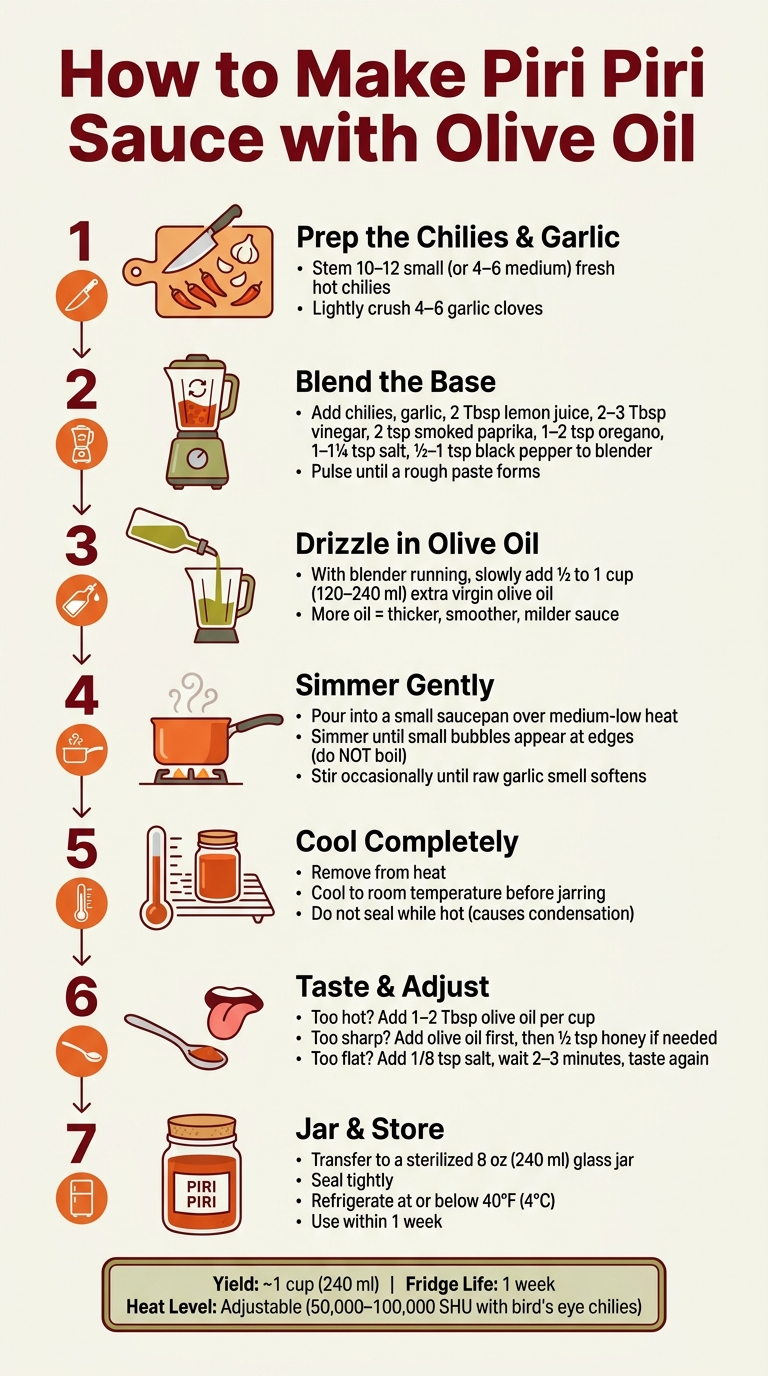
How to Make Piri Piri Sauce: Step-by-Step Visual Guide
Blend the Base and Add the Olive Oil
Start by stemming the chilies and giving the garlic a light crush. Add the chilies, garlic, lemon juice, vinegar, smoked paprika, oregano, salt, and pepper to a blender or small food processor. Pulse a few times, then blend until you get a rough paste.
Then, with the blender running, slowly drizzle in the olive oil. This step matters. It helps the oil mix with the chilies and acid instead of floating on top. More oil gives the sauce extra body and a smoother feel, while less oil keeps it lighter and hotter.
Simmer, Cool, and Jar the Sauce
Pour the blended sauce into a small saucepan and set it over medium-low heat. Let it simmer until you see small bubbles around the edges, not a rolling boil. A hard boil can mute the fresh chili taste and make the olive oil seem flat.
Stir now and then until the raw garlic smell softens and the sauce tastes more blended together. It should thicken a little as it cooks. Once it’s there, take the pan off the heat and let the sauce cool all the way to room temperature before moving it to a clean jar. If you seal it while it’s still hot, condensation can form and thin the sauce.
Transfer the cooled sauce to the jar and seal it tightly. After it has cooled, taste it and get ready to adjust the heat, acid, and olive oil in the next step.
How to Balance Heat, Acid, and Olive Oil Flavor
After the sauce cools, taste it again before you put it in the fridge. Simmering changes how everything lands, and once the sauce rests, the flavor can shift more than you’d expect. That makes this the best moment to tweak it. If you already poured it into a jar, scoop out a small portion first and test your changes there.
Fixes for a Sauce That Is Too Hot, Too Sharp, or Too Thick
If the sauce is too hot, whisk in 1 to 2 tablespoons of extra virgin olive oil per cup. Then wait 5 minutes and taste again. Olive oil helps spread capsaicin and take the edge off the burn without stripping away the chili taste.
If the sauce tastes too sharp or sour, start with olive oil. It can round out the edges and make the sauce feel smoother. If it still comes across as harsh, add a small amount of honey or sugar, starting with 1/2 teaspoon.
If the flavor seems flat or muddy, the sauce is probably under-salted. Add a small pinch of salt, about 1/8 teaspoon, stir, wait 2 to 3 minutes, and taste again. If the sauce tastes brighter, add another pinch of salt.
Quick Adjustment Guide for Flavor and Texture
Use this table when you want a fast fix without guessing.
| Adjustment | Effect on Heat | Effect on Flavor | Effect on Texture | When to Use It |
|---|---|---|---|---|
| More olive oil | Decreases perceived heat | Adds richness and complexity | Thicker, silkier, more cohesive | Sauce is too hot, too sharp, or too thin |
| More lemon/vinegar | No direct change | Brighter, tangier, more fresh | Slightly thinner if liquid is added | Sauce tastes dull or heavy |
| More salt | No direct change | Enhances all flavors, balances bitterness | No major change | Flavors seem muted or muddy |
| Splash of water | Slight decrease by dilution | Can dull flavor if overused | Thinner, more pourable | Sauce is too thick but already well-balanced |
Adjust one thing at a time, then taste again after a few minutes. That small pause matters. It gives the sauce time to settle so you can tell whether the fix worked or if it needs one more nudge.
Serving, Storage, and Key Takeaways
Ways to Use Piri Piri Sauce at Home
Once the sauce tastes balanced, you can use it in a few easy ways around the kitchen. It works well as a marinade for chicken thighs or shrimp, a baste during the last few minutes of cooking, or a dip for fries, roasted potatoes, grilled fish, vegetables, and rice bowls.
If you want something softer and less spicy, stir the sauce into mayonnaise or yogurt. That gives you a milder version that still has plenty of flavor.
How Long the Sauce Keeps in the Refrigerator
If you have sauce left over, store it cold as soon as it cools down. Let it cool completely, then transfer it to a clean glass jar or an airtight container. Keep it at or below 40°F (4°C) and use it within 1 week.
Toss it out if anything seems off. That includes a bad smell, mold, bubbling, a slimy texture, or a sauce that stays separated even after shaking.
Key takeaways for a great batch every time:
- Start with good ingredients for clean heat and balance.
- Use extra virgin olive oil to help keep the sauce smooth.
- Taste it after simmering, then chill it promptly.
FAQs
Can I use dried chilies instead of fresh?
Yes. Dried chilies are often the better pick because they have less moisture. That matters since lower moisture helps cut the risk of spoilage. It can also help the infused oil stay shelf-stable for 6 to 12 months when you store it in a cool, dark place.
For more flavor, lightly crush the chilies before adding them. That gives the oil more surface area to work with. You can also toast them for a short time in a dry skillet if you want a deeper, more layered taste before mixing them into your premium Big Horn extra virgin olive oil.
Can I freeze piri piri sauce?
Yes - you can freeze Piri Piri sauce to make it last longer.
A simple trick is to pour the sauce into ice cube trays before freezing it. That way, you can thaw only the amount you need for cooking instead of defrosting the whole batch.
What foods pair best with piri piri sauce?
Piri piri sauce goes especially well with grilled meats, above all chicken. It adds a spicy, savory kick that cuts through the char in a way that just works. It’s also great as a finishing drizzle for seafood, pasta, and pizza.
If you want something a bit lighter, spoon it over roasted or grilled vegetables, soups, or eggs. You can use it as a marinade too, or add it at the end for an extra layer of flavor.