

Checklist for Recycling Metal Caps and Closures
Recycling metal caps and closures can save energy, reduce waste, and prevent litter. But improper handling can cause caps to slip through sorting machines or contaminate recycling streams. Here's how to do it right:
- Identify the Material: Use a magnet. Steel caps stick, aluminum ones don’t.
- Clean Thoroughly: Rinse off any residue with warm water and let them air-dry.
- Sort by Material: Keep steel and aluminum caps separate.
- Use the 'Caps in a Can' Method: Place small caps in a matching metal can and crimp it shut.
- Check Local Rules: Confirm your area’s recycling guidelines for caps and closures.
Why it matters? Aluminum recycling saves up to 95% of the energy compared to new production, and steel caps are recyclable too. Follow these steps to ensure your caps are processed properly and stay out of landfills.
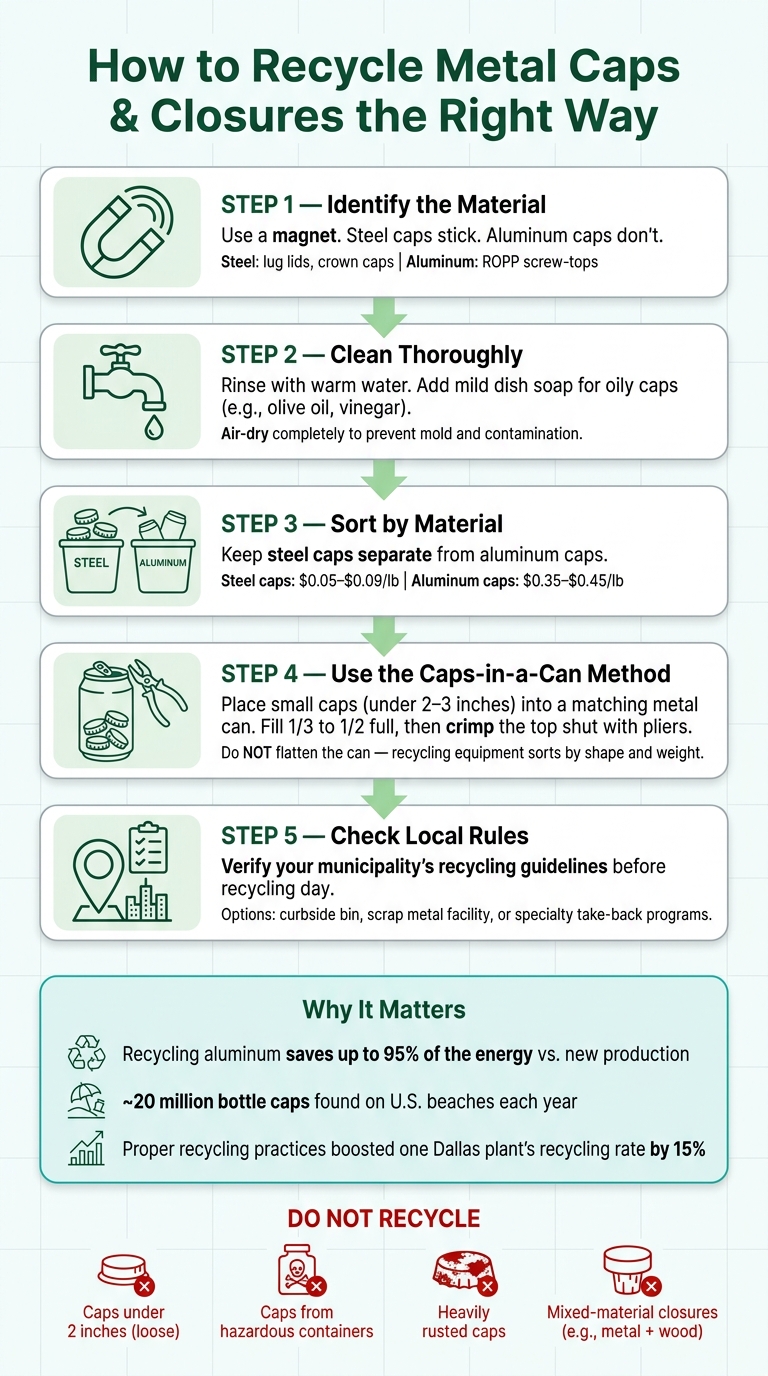
How to Recycle Metal Caps & Closures: Step-by-Step Guide
Recycling Aluminium screw tops - you can leave your cap on!
sbb-itb-4066b8e
How to Identify Metal Caps and Closures
Metal caps can be identified based on their material, design, and how they seal containers.
Common Types of Metal Caps
Metal caps come in several familiar forms:
- Lug caps (twist-off lids): These wide, ridged lids are commonly found on jars of jam, pickles, and pasta sauce. They open with a quick partial turn.
- Crown caps: The crimped, serrated lids typically seen on beer and glass soda bottles.
- Continuous thread (CT) caps: These screw-on and screw-off lids resemble standard jar lids and are often used for specialty food bottles.
- ROPP caps: Made from aluminum, these sleek screw-tops are used on premium bottles of olive oil, vinegar, and spirits. They are formed directly onto the bottle neck to create a tamper-evident seal. For example, Big Horn Olive Oil uses ROPP caps for its products.
| Cap Type | Common Use | Material |
|---|---|---|
| Lug (Twist-Off) | Jams, pickles, sauces | Tinplate steel |
| ROPP | Olive oil, vinegar, spirits | Aluminum |
| Crown | Beer, soda | Steel |
| Continuous Thread | Specialty foods | Steel or aluminum |
The Magnet Test: Steel vs. Aluminum
A simple magnet test can help you distinguish steel caps from aluminum ones. If a magnet sticks to the cap, it’s steel. If it doesn’t, the cap is aluminum.
This distinction is crucial because recycling facilities require caps to be sorted by material. Robert Pickens of the Oklahoma Recycling Association explains:
"It would not be acceptable to a metal processor to place an aluminum cap in a steel container … or the other way around."
Steel caps, like lug lids and crown caps, are magnetic and heavier. Aluminum caps, such as ROPP screw-tops, are lighter and non-magnetic. Interestingly, food-grade aluminum caps are worth more to recyclers, fetching between $0.35 and $0.45 per pound, compared to $0.05 to $0.09 per pound for steel.
When Metal Caps Cannot Be Recycled
Not all metal caps are suitable for recycling. Here are some exceptions:
- Small caps (under 2 inches in diameter): These can fall through sorting machinery and mix with glass shards, causing issues during the recycling process.
- Caps from hazardous containers: If a cap comes from a container that held paint, chemicals, or other hazardous substances, it’s not accepted in standard recycling programs.
- Caps with inseparable materials: Closures that combine metal with other materials, like decorative wood or pump dispensers, are not recyclable.
- Heavily rusted caps: While light surface rust is often acceptable, deep or flaking rust can compromise the metal's quality, making it unsuitable.
One thing that doesn’t disqualify a cap is the thin plastic or rubber liner inside. These liners, designed to protect the metal from food contact, typically burn off during the recycling process and are generally accepted by recyclers.
Once you’ve identified your caps, the next step is to clean them properly before recycling. Sorting and identifying your caps correctly is key to ensuring they are processed effectively.
How to Clean Metal Caps Before Recycling
Recycling metal caps the right way starts with making sure they’re clean. Dirty or greasy caps can ruin a whole batch of recyclables, and if they’re not properly cleaned, they may end up in a landfill instead. As Paul R. Montgomery from Disposal Cleverly advises:
"Ensure the metal bottle caps are clean and free of any contaminants."
Clean caps are key to keeping the recycling process efficient.
Removing Residue
The first step is to get rid of any leftover liquid or residue. If it’s an olive oil cap, flip it upside down to drain out any oil that’s pooled inside. For thicker residues, like jam or sauce, use a small spoon or spatula to scrape out as much as possible before rinsing. This not only saves water but also makes the rinse much more effective. Once the residue is scraped off, move on to rinsing.
Rinsing with Warm Water
Rinse the caps under warm running water. Warm water is more effective at breaking down oily residues than cold water. For particularly greasy caps, like those from olive oil or vinegar bottles, add a drop of mild dish soap and give it a quick swirl before rinsing again. According to the Rhode Island Resource Recovery Corporation, metal containers should be "empty at a minimum, but rinsed whenever possible". Don’t worry about the thin plastic or rubber liners inside bottle caps - they’ll burn off during the high-temperature melting process at recycling facilities.
Drying Caps Completely
After rinsing, let the caps dry completely. Place them on a drying rack or a clean towel and allow them to air dry. Ensuring the caps are completely dry prevents mold or contamination during storage or transport. Once they’re dry, they’re ready to be sorted and stored for recycling.
| Cleaning Step | Action | Why It Matters |
|---|---|---|
| Empty | Pour out liquid; scrape thick residue | Saves water and reduces mess during rinsing |
| Rinse | Use warm water, add mild soap for oily caps | Effectively removes oil and food particles |
| Dry | Air-dry on a rack or towel | Prevents mold and contamination during storage |
How to Sort and Store Metal Caps for Recycling
Once you've cleaned and dried your metal caps, it's crucial to ensure they don't get lost during the recycling process. Small caps, in particular, can easily slip through sorting equipment, often ending up in the glass stream and causing contamination.
Separating by Material
Sorting caps by material is easier than you might think - just use the magnet test. If a magnet sticks to the cap, it's steel; if not, it's aluminum. This distinction is more important than it seems. As Robert Pickens from the Oklahoma Recycling Association explains:
"It would not be acceptable to a metal processor to place an aluminum cap in a steel container … or the other way around."
Steel caps are commonly found on items like food jars and beer bottles, while aluminum caps are typical for wine bottles and olive oil containers. To keep things organized, store steel caps in a steel can and aluminum caps in an aluminum can. Once sorted, you're ready to secure them for recycling.
The 'Caps in a Can' Method
The "Caps in a Can" method is a foolproof way to keep small caps from getting lost. Start by taking a clean metal can that matches the material of your caps, drop the caps inside, and once the can is about one-third to halfway full, use pliers to crimp the opening shut in several spots. Avoid flattening the can - recycling systems rely on the can's shape and weight for proper sorting. A crushed can might be mistaken for paper or cardboard and sent to the wrong recycling stream. As Recycle Coach points out:
"Trapping them in the can ensures the caps are captured properly and reach the end cycle of the sorting process."
This method ensures your caps are processed correctly and don't go to waste.
Handling Larger Metal Lids
Unlike small caps, larger metal lids are generally easier for sorting machinery to handle. Many recycling facilities, including those managed by Waste Management, accept these lids loose in the curbside bin. However, local guidelines can vary. Some areas prefer larger lids placed loose so magnets at the Materials Recovery Facility (MRF) can pick them up directly, while others ask that they be placed inside a steel can. As Robert Pickens notes:
"Wide-mouth metal jar lids with a minimum diameter of 2 or 3 inches may be an exception, even if other metal lids are not accepted in mixed recycling."
When in doubt, it's always a good idea to check with your local recycling provider to ensure you're following the correct procedures.
Checking Your Local Recycling Rules
Recycling metal caps and closures can get tricky since the rules vary depending on where you live. To make sure you're recycling the right way, visit your municipality's website for the most accurate guidelines. Taking this step ensures those caps end up in the right place.
Confirm Curbside Recycling Rules
Once you've cleaned and sorted your metal caps, it's time to double-check your local recycling rules. Many cities provide tools like an "A-to-Z" recycling directory or a "What Goes Where" guide. You can search for terms like "metal caps" or "metal lids" to find specifics. For instance, in Sacramento, CA, you can leave lids on metal cans and glass jars. Meanwhile, in Brunswick County, NC, lids must be removed from glass bottles entirely. These details are important because even a single misplaced lid can mess up an entire batch of recyclables.
If your curbside program doesn't accept metal caps, don't worry - there are other options, like drop-off centers or scrap metal facilities.
Drop-Off and Scrap Metal Options
When curbside recycling isn’t an option for metal caps, take them to a local scrap metal facility or a community recycling center. Just make sure to remove any non-metal pieces, like plastic liners, before you drop them off. Most scrap facilities require items to be at least 50–80% metal by weight.
If neither curbside nor scrap metal facilities work for you, specialty take-back programs might be the answer.
Specialty Take-Back Programs
For those tricky caps that don't fit into curbside or scrap metal recycling, specialty take-back programs can help. One example is New Zealand's "Caps and Lids Recycling Scheme", a program designed to keep metal and plastic lids out of landfills when regular recycling falls short. While this particular program is overseas, it highlights a growing trend. Check with local retailers, grocery stores, or community organizations to see if similar initiatives are available in your area.
Recycling Caps from Your Olive Oil and Vinegar Bottles
This section focuses on applying earlier cleaning and sorting tips specifically to the caps from olive oil and vinegar bottles.
Recycling Caps from Big Horn Olive Oil Bottles

If you enjoy cooking with high-quality olive oil or vinegar, you’ve likely encountered recyclable small metal caps. For example, Big Horn Olive Oil bottles - whether it’s their Estate Reserve Ultra Premium EVOO or Traditional 18-Year Aged Dark Balsamic Vinegar - usually feature aluminum twist-off caps. To confirm the material, try the magnet test. Patti Roth of Earth911 offers this advice:
"Remove aluminum twist-off tops from wine, olive oil, and sparkling water bottles."
Always separate the cap from the glass bottle before recycling, as they require different processing methods. Once removed, clean the cap by rinsing and air-drying it, as outlined earlier. If your local recycling program doesn’t accept loose caps, use the "Caps in a Can" method described above.
Most aluminum caps have a thin plastic or rubber lining inside. Don’t worry about this detail - it typically burns off during the smelting process and won’t interfere with recycling.
Building a Recycling Routine
Making cap recycling part of your routine is easier than you might think. Designate a specific spot to collect your olive oil and vinegar caps - like a clean, empty aluminum can on your countertop or pantry shelf. After finishing a bottle, follow the cleaning steps, then drop the cap into the can.
"I keep an empty can under the sink, add all the caps, crimp it shut, and dispose of it." - Emily, @urbanoreganics
With an estimated 20 million bottle caps found on U.S. beaches each year, this simple habit can make a big difference. By keeping a collection can handy, you ensure your caps don’t end up contributing to that staggering number. Add this step to your recycling routine for a small but impactful change.
Final Checklist Before Recycling Day
Before recycling day rolls around, take a moment to go through this quick checklist. It pulls together all the key steps to make sure your metal caps are ready for proper recycling.
Check That Caps Are Clean and Dry
Dirty caps can cause problems during processing and even attract pests. The Rhode Island Resource Recovery Corporation emphasizes:
"Metal cans must be empty at a minimum, but rinsed whenever possible."
Rinse each cap thoroughly with warm water to remove any residue, then let them air-dry completely. Wet caps tend to clump together, making sorting more difficult.
Secure Small Caps in a Steel Can
Small caps, especially those less than 2–3 inches, can slip through sorting screens. To prevent this, collect them in a steel can. Fill the can about one-third to one-half full with caps, then crimp the top closed. Robert Pickens from the Oklahoma Recycling Association advises:
"Pinch just the top to hold the caps in the larger container."
Keep the can in its original three-dimensional shape. Recycling equipment identifies steel cans based on their size, shape, and weight.
Remove Non-Recyclable Parts
Most metal caps include a thin plastic or rubber liner inside. Don’t worry about removing these; they burn off during smelting. However, thicker plastic inserts or mixed-material gaskets should be taken out and discarded. Additionally, ensure all caps have been detached from their glass bottles or jars, as metal and glass require separate recycling processes.
| Final Check | What to Look For | Action |
|---|---|---|
| Residue-free | No oil, vinegar, or food remains | Rinse and air-dry |
| Small caps secured | Loose caps under 3 inches | Place in a crimped steel can |
| Can shape intact | Flattened cans | Keep in three-dimensional shape |
| Non-metal parts removed | Thick plastic inserts or gaskets | Remove and discard |
| Separated from glass | Caps still on bottles or jars | Detach before recycling |
Conclusion: Small Steps That Add Up
Recycling metal caps doesn’t have to be complicated. It all starts with a simple routine: clean the caps, sort them, and secure them inside a matching metal can before recycling day.
These small actions can lead to big changes. For instance, recycling aluminum saves up to 95% of the energy needed to produce it from raw materials. Plus, about 20 million bottle caps are found on beaches annually - most of which could be kept out of the environment with better containment. In Dallas, a recycling plant reported a 15% jump in recycling rates when residents followed proper practices.
Scott Hudack, Supervisor at American Metal Recycling, sums it up perfectly:
"I think everything we do to save our environment is a step in the right direction."
This idea applies to something as small as recycling bottle caps. The next time you finish a bottle of Big Horn Olive Oil, remember that every cap you recycle matters. Start with one can under your sink, crimp it shut when it’s half full, and watch how this small habit grows into a meaningful contribution over time.
FAQs
Will my recycling bin accept loose metal caps?
Whether you can recycle loose metal caps depends on your local recycling rules. Some programs accept loose caps for magnetic sorting, while others ask you to place small caps inside a metal can to prevent sorting problems. If you're recycling caps from your Big Horn Olive Oil bottles, make sure to check if your provider requires them to be dropped off at a scrap metal facility instead of putting them in curbside bins.
What’s the safest way to recycle tiny caps that fall through machines?
To keep small metal caps from slipping through sorting machines, gather them in an empty metal can. Use a magnet to determine the material: steel caps will stick, while aluminum caps won’t. Pair the caps with a can made of the same material. When the can is about one-third to halfway full, use pliers to crimp it shut, ensuring the caps stay secure for recycling.
Do I need to remove the plastic liner inside a metal cap?
No, you don’t need to take out the plastic liner inside a metal cap. These liners usually burn away during the recycling process. If the liner comes off easily, you can throw it in the trash. However, if it’s stuck firmly, leave it in place to avoid creating sharp edges. For closures from Big Horn Olive Oil, gather them in a clean steel can, crimp the can shut, and recycle it.