

Seasonal Vegan Pasta with Lemon Olive Oil
This vegan pasta recipe uses simple ingredients like seasonal vegetables and lemon-infused olive oil to create a flavorful, dairy-free dish. The sauce combines high-quality olive oil with starchy pasta water for a silky texture, eliminating the need for cream or cheese. Seasonal produce - such as spring asparagus, summer tomatoes, fall mushrooms, or winter root vegetables - adds variety and depth to the dish year-round. A premium lemon-infused olive oil enhances the citrus flavor, making it the key ingredient for a vibrant finish.
Key Highlights:
- Cooking Tip: Use reserved pasta water to emulsify the sauce for a smooth texture.
- Seasonal Ingredients: Rotate vegetables like zucchini in summer or kale in fall for freshness and flavor.
- Lemon Olive Oil: Adds a bright, citrusy layer that elevates the dish.
- Quick Prep: Ready in 15–25 minutes, perfect for busy weeknights.
- Storage: Keeps for 3–4 days in the fridge and reheats well on the stovetop.
This recipe is a simple yet flavorful way to enjoy plant-based cooking with seasonal ingredients.
My new favorite pasta for spring!
sbb-itb-4066b8e
Choosing Seasonal Ingredients
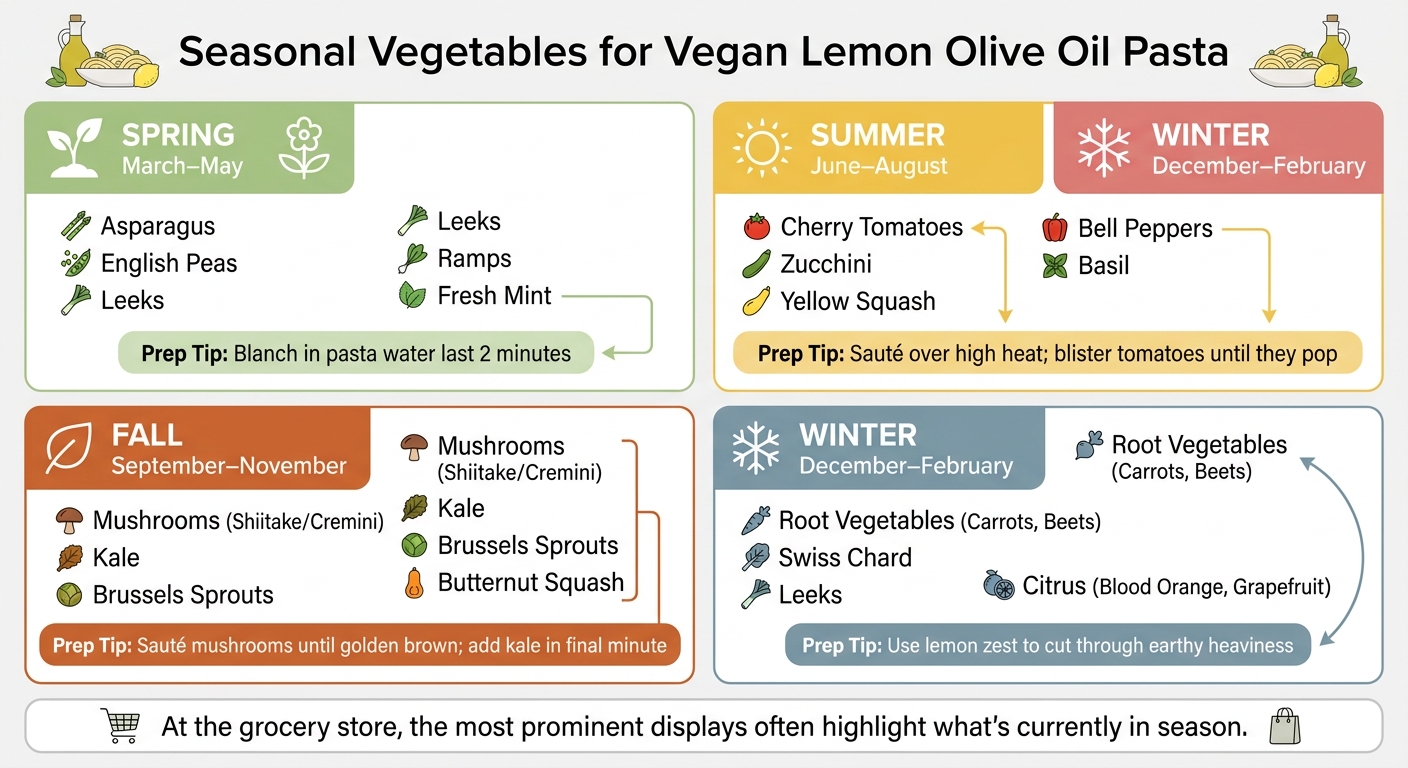
Seasonal Vegetables for Vegan Lemon Olive Oil Pasta
Pairing seasonal ingredients with the vibrant citrus notes of your sauce can bring out the best in every bite. Carlie Williams, a Registered Dietitian Nutritionist at Factor, emphasizes that produce harvested at its peak not only tastes better but also retains more nutrients. A simple tip: at most grocery stores, the most prominent and appealing displays often highlight what's currently in season. Here's a guide to seasonal produce that can take your dish to the next level.
Spring: Bright and Crisp Produce
Spring (March–May) offers ingredients that are fresh and crisp, perfect for lightening up your dish. Look for asparagus, English peas, leeks, ramps, and fresh mint. To keep them at their best, buy in small quantities to avoid spoilage. When selecting asparagus, choose stalks with tightly closed tips that snap cleanly. For peas, opt for pods that feel plump and firm.
A quick prep tip: toss asparagus and peas into the boiling pasta water during the last 2 minutes of cooking. This simple blanching method locks in their vibrant green color and keeps their texture snappy. Add fresh mint after removing the dish from heat - it wilts quickly and loses its fragrance if exposed to high temperatures. These springtime additions complement the citrusy zest of olive oil, creating a bright and refreshing pasta dish.
Summer: Vibrant and Juicy Flavors
Summer (June–August) is all about bold, juicy flavors that add sweetness and depth to your dish. This is the season for cherry tomatoes, zucchini, yellow squash, bell peppers, and basil. Look for tomatoes that feel heavy and have a fragrant aroma, and choose basil leaves that are deep green without dark spots.
For zucchini and squash, a quick sauté over high heat in a wide skillet ensures they stay crisp and don’t turn mushy. Blister cherry tomatoes in the same pan until they just start to pop - this intensifies their natural sweetness and adds a bit of acidity, which pairs beautifully with lemon olive oil. These summer ingredients enhance the citrusy brightness of your sauce while adding richness to the dish.
Fall: Warm and Earthy Additions
Fall (September–November) brings in hearty, earthy produce that adds depth to your pasta. This season highlights mushrooms, kale, Brussels sprouts, and butternut squash. When picking Brussels sprouts, look for compact, bright green heads, and choose squash that feels heavy for its size.
Sauté shiitake or cremini mushrooms over medium-high heat until they release their moisture and develop a golden brown color - this creates a savory, almost meaty flavor. Kale can be added directly to the sauce in the final minute of cooking, where its slight bitterness provides a nice contrast to the citrusy olive oil. These fall flavors bring a cozy, rich dimension to your dish.
Winter: Hearty and Comforting Options
Winter (December–February) calls for robust, warming ingredients that make your pasta hearty and satisfying. Look for roasted root vegetables, sturdy greens like Swiss chard, leeks, and citrus. Carrots and beets should feel firm and heavy, while leeks are best when you use only the white and light green parts - the dark green tops tend to be too tough and bitter for pasta.
Winter ingredients are dense and earthy, but lemon zest can cut through the heaviness without adding extra liquid. A splash of dry white wine, such as Sauvignon Blanc, brings a touch of acidity that ties the olive oil and lemon together beautifully. For a finishing touch, garnish with slices of blood oranges or grapefruit, both of which are at their peak during winter. These citrus fruits add a burst of brightness that connects the dish back to its citrusy foundation.
Preparing the Pasta and Lemon Olive Oil Base
How to Cook Pasta to Al Dente
Start by bringing a large pot of salted water to a rolling boil. Add your pasta and cook it according to the package instructions, but stop about a minute early. This way, the pasta can finish cooking in the sauce, soaking up the lemon olive oil flavors without becoming overcooked.
Before draining, be sure to reserve at least 1 cup of the starchy cooking water. This water is key to creating a smooth, velvety sauce. As Nutrition Coach Rena Awada explains:
"It is always best to cook your pasta al-dente because it will continue to cook even after you remove it from the boiling water."
Whatever you do, don’t rinse the pasta after draining. The starch on the surface helps the sauce cling to every strand. Use the reserved pasta water right away to build your sauce.
How to Make a Silky Lemon Olive Oil Sauce
While your pasta cooks, warm lemon-infused olive oil in a wide skillet over medium heat. Add minced garlic and sauté for about 30 seconds, just until it’s fragrant and lightly golden. Be careful not to let the garlic burn - it can turn bitter quickly. For a hint of spice, toss in a pinch of red pepper flakes.
Once the garlic is softened, take the skillet off the heat. Add the drained pasta directly into the pan and slowly incorporate the reserved pasta water, a few tablespoons at a time, while tossing the pasta vigorously. The starch from the pasta water binds with the oil, creating a glossy, smooth sauce. Suzy Karadsheh, Founder of The Mediterranean Dish, explains:
"You simply add a splash of the pasta's water and stir vigorously. The water's starch combines with the olive oil to make a glossy, decadent sauce without the cream!"
Off the heat, grate lemon zest over the pasta for a burst of fresh citrus aroma. Always zest the lemon before juicing it - it’s much easier when the lemon is still firm. A premium lemon-infused extra virgin olive oil, like the one from Big Horn Olive Oil (https://bhooc.com), brings out the citrusy brightness and complements the zest beautifully.
Adding Vegan Ingredients for More Flavor
For an extra layer of flavor, sprinkle a touch of toasted nutritional yeast. It adds a savory, parmesan-like depth to the dish. Chef and Cookbook Author Isa Chandra highlights this technique:
"The eight cloves of garlic are toasted in oil with nutritional yeast for a parmesan effect that happens with no parmesan."
If the pasta starts to look a little dry, a drizzle of fresh olive oil will bring back its glossy finish.
Building Seasonal Variations of the Recipe
How to Prep Seasonal Vegetables
The way you prepare vegetables can make a bigger difference than the ingredients themselves. Firm vegetables like asparagus, bell peppers, and butternut squash shine when quickly sautéed over high heat in a wide pan. This technique gives them a light char while keeping their crisp texture intact. As Chef and Author Isa Chandra explains:
"The asparagus, pepper, and squash get sautéed hot and fast, then pulled out of the pan before anything else happens... Cooked separately and folded back at the end, they keep their color, their bite, and their char."
For quicker-cooking vegetables like peas or thin asparagus spears, blanching them directly in the pasta water is a time-saving option that also ensures they’re evenly seasoned. As for delicate greens like arugula or spinach, just stir them in at the very end. The pasta’s residual heat will wilt them perfectly without losing their fresh flavor.
Once your vegetables are prepped, they’ll be ready to blend seamlessly into the pasta and sauce.
Combining Pasta, Sauce, and Toppings
When your vegetables are ready, add them to the finished sauce. Toss everything gently over low heat to preserve their vibrant color and texture. If the sauce starts to thicken too much, a splash of reserved pasta water can help loosen it up.
Here’s a quick guide to prepping seasonal vegetables and how each method enhances their flavor and texture:
| Vegetable | Method | Benefits |
|---|---|---|
| Asparagus, bell peppers, squash | Sauté & remove | Keeps char and crunch; avoids overcooking in the sauce |
| Peas, broccolini | Blanch with pasta | Saves time and seasons vegetables evenly from the inside out |
| Arugula, spinach, fresh herbs | Raw/residual heat | Maintains delicate flavor and texture without overcooking |
For added texture and flavor, sprinkle the dish with toasted pine nuts or crushed walnuts. These toppings provide a buttery crunch that complements the creamy sauce. Fresh herbs like mint and dill work beautifully in spring, while basil suits summer and thyme pairs well with fall dishes. To make the dish even heartier, consider mixing in a few spoonfuls of tofu ricotta or some white beans.
Final Touches for the Best Flavor
With everything combined, it’s time to fine-tune the dish. A drizzle of premium lemon-infused extra virgin olive oil can elevate the lemony base. Melissa Huggins, Creator of Vegan Huggs, shares this tip:
"Regular olive oil works well for cooking, but when finishing the dish, it is best to use extra-virgin olive oil for optimal flavor."
Before plating, taste the pasta and adjust as needed with a squeeze of fresh lemon juice or a pinch of flaky salt. For a standout finish, consider using lemon-infused olive oil from Big Horn Olive Oil - its bright citrus notes enhance the fresh herbs and bring the dish to life without overwhelming the flavors.
Troubleshooting, Storage, and Extra Tips
Fixing Common Pasta Problems
Even simple pasta dishes can run into trouble, but most issues are easy to resolve with a few quick tricks.
One frequent issue is a greasy or oily texture, which happens when the oil and water in the sauce fail to emulsify. As Olive Oil Extra explains:
"This liquid is the 'liquid gold' required to create a perfect emulsion."
To fix this, add ¼ cup of reserved pasta water and toss the pasta over low heat. The starch in the water helps bind the ingredients into a smooth, velvety sauce. On the other hand, if the sauce is too thin or watery, turn up the heat slightly and whisk in a small amount of nutritional yeast to thicken it.
A bitter aftertaste can occur if the garlic burns or if lemon zest includes the bitter white pith. To counteract this, try adding a pinch of flaky salt or a small squeeze of fresh lemon juice to balance the flavors.
Here’s a quick reference for common pasta problems:
| Problem | Quick Fix |
|---|---|
| Greasy/oily texture | Add ¼ cup pasta water and toss vigorously |
| Sauce too thin | Increase heat slightly; whisk in nutritional yeast |
| Bitter aftertaste | Add a pinch of salt or more lemon juice |
| Sauce won't stick | Add a teaspoon of nutritional yeast to improve grip |
| Mushy pasta | Reduce cooking time by 1 minute to avoid overcooking |
With these tips, your pasta can go from “meh” to mouthwatering. Now, let’s talk about storing and reheating leftovers.
How to Store and Reheat Leftovers
To keep leftover pasta fresh, store it in an airtight glass container in the refrigerator for up to 3–4 days. Glass containers are ideal because they don’t absorb food odors and provide even reheating. Make sure the pasta has cooled completely before sealing it to avoid trapping excess moisture, which can make it soggy.
For reheating, the stovetop is your best bet. Suzy Karadsheh, Founder and CEO of The Mediterranean Dish, suggests:
"To reheat, add it to a skillet on the stove over medium heat with a little water. Stir until the pasta is warmed through, adding a drizzle more oil... if you'd like."
If you’re in a rush, the microwave works too. Heat the pasta in short intervals, stirring in between to ensure even warming. Jasmine Briones of Sweet Simple Vegan adds: "If the pasta seems dry, add an additional tablespoon or two of olive oil to rehydrate and make saucy again." Alternatively, you can skip reheating altogether and enjoy it cold as a pasta salad - an effortless and delicious option.
Other Ways to Use Big Horn Olive Oil
Once you’ve got a bottle of Big Horn Olive Oil's lemon-infused EVOO, don’t limit it to pasta. Its bright citrus flavor makes it a fantastic finishing touch for roasted asparagus, zucchini, or blistered cherry tomatoes. Drizzle it on after cooking to preserve its aroma and healthful compounds.
For salads, pair it with Big Horn’s Traditional 18-Year Aged Dark Balsamic Vinegar ($8.99) to create a Mediterranean-inspired vinaigrette. The balsamic’s tangy richness complements the citrus notes of the oil beautifully. You can also use the lemon olive oil as a dip for crusty bread or toss it with steamed greens like kale or chard, along with fresh herbs, for a simple yet nutrient-packed side dish. The secret to all these uses? Add the oil after cooking to maximize its flavor and quality.
Conclusion
Simple, plant-based cooking works beautifully year-round. By focusing on seasonal ingredients - like tender asparagus in spring, juicy tomatoes in summer, earthy mushrooms in fall, or hearty beans in winter - you can keep meals flavorful and fresh without making them overly complicated. This approach builds on the techniques and ideas shared earlier.
One key ingredient to pay attention to is your olive oil. As Jasmine Briones of Sweet Simple Vegan explains:
"For best results, we recommend using the best, high-quality oil your budget will allow. It's the base of the sauce recipe and acts as the primary source of fat and richness."
A great option to consider is Big Horn Olive Oil's Whole Fruit Lemon Olive Oil. Made from certified organic, early harvest olives and infused with fresh Eureka lemons, it adds a bright, citrusy depth to your dish that standard oils just can’t replicate. A 375 ml bottle is priced at $23.99, with sample sizes starting at $8.99. You can check it out here.
Here are a few tips to keep in mind: save some pasta water before draining to help adjust the sauce consistency, add the lemon olive oil as a finishing touch to preserve its aroma, and adjust herbs or proteins based on what's in season.
Ultimately, seasonal cooking isn’t about rigid rules - it’s about experimenting and making the most of what’s available. This lemon olive oil pasta serves as a versatile foundation, ready to evolve with fresh produce and premium ingredients from your local market.
FAQs
What pasta shapes work best for lemon olive oil sauces?
Thin and long pastas, like spaghetti or angel hair, are ideal for lemon olive oil sauces because their shape allows the lighter texture to coat evenly. Flat noodles, such as linguine, fettuccine, or even vegan tagliatelle, also work wonderfully as they hold onto the sauce beautifully. To elevate your dish, use premium Big Horn Olive Oil - it creates a silky, glossy sauce that clings perfectly to every strand of pasta.
How do I keep the lemon flavor bright without making the pasta sour?
To maintain a lively lemon flavor without overwhelming acidity, rely on lemon zest. The zest packs aromatic oils that enhance the dish without adding extra sourness. For more brightness, simply increase the amount of zest instead of juice. Combine this with high-quality extra virgin olive oil - like the kind from Big Horn Olive Oil - for a rich, balanced flavor. To achieve a silky, well-coated sauce, emulsify it with starchy pasta water over low heat.
What can I add to make this vegan pasta more filling?
To make your vegan pasta more satisfying, consider adding plant-based proteins like canned chickpeas, cannellini beans, or firm tofu cubes. For a meaty texture, mushrooms are a great option. You could also switch to protein-packed pasta made from lentils or quinoa for an extra boost.
Top it off with seared soy curls, tempeh crumbles, or a creamy tofu-based ricotta to enhance the flavor and keep you feeling full longer.