

Ultimate Guide to Balsamic Chutneys
For balsamic chutney, I start with 2 cups of chopped fruit or vegetables, 1 cup of onion, 1 tablespoon of EVOO, and ¼ cup of balsamic vinegar. I add sweetener only as needed, then simmer until tender and spoonable.
My approach is simple:
- Choose your texture: cook less for chunky relish or longer for softer chutney.
- Balance the flavor: taste a cooled spoonful before adjusting vinegar, sweetener, salt, or spices.
- Control the thickness: simmer to reduce excess liquid, or add water a tablespoon at a time.
- Serve with savory foods: try cheese, grilled meats, roasted vegetables, or grain bowls.
Storage matters as much as flavor. I refrigerate within 2 hours - or 1 hour above 90°F - and use within 3–4 days, or freeze extra portions. <u>This starting ratio is for refrigerator storage, not canning.</u>
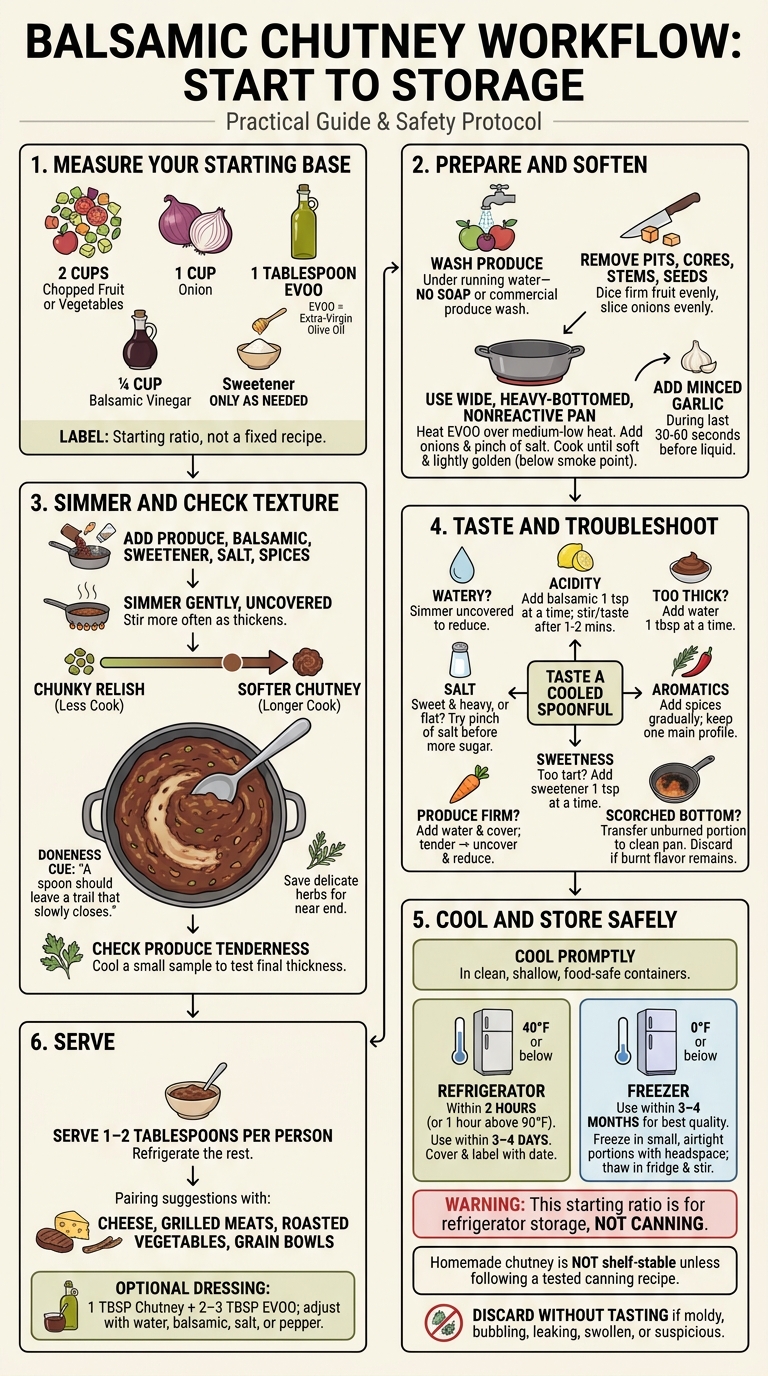
Balsamic Chutney: Mix, Cook, and Store
Caramelised Red Onion Chutney | Pizza, Burgers & Beyond
sbb-itb-4066b8e
Balancing Sweet and Tangy Flavors
The produce you choose sets the sweet-tangy balance.
Fruit, Vegetable, and Onion Pairings
Treat these pairings as flavor guides, not fixed recipes. Taste your produce first: ripe fruit usually needs less sweetener, while tart varieties call for a different balance. Then use the pairings below to guide seasoning and serving choices.
Pairing Dominant flavor Seasoning direction Serving ideas Fig and red onion Rich, jammy, savory Rosemary, black pepper Cheese boards, lamb Apple and onion Bright, gently sweet Thyme, mustard Poultry, pork Pear and shallot Delicate, aromatic Thyme, black pepper Baked feta, crostini Plum and red onion Fruity, tangy Ginger, chile Grilled meats, eggplant Cherry and onion Fruity, sweet-tart Rosemary, black pepper Roasted meats, grain bowls Tomato and onion Savory, lightly sweet Basil, garlic Bruschetta, chickpeas Beet and shallot Earthy, sweet Cumin, thyme Feta, lentils, greens
Sour cherries may need more sweetener than sweet cherries. Allow more time for juicy tomatoes and ripe pears to reduce. For lighter-colored fruits, consider using a white balsamic vinegar to maintain the produce's vibrant color. Beets may need precooking or fine dicing to turn tender.
Adjusting Sweetness, Acidity, and Seasoning
Taste a cooled spoonful, then adjust acidity, sweetness, salt, and aromatics - in that order. Add dark balsamic vinegar 1 teaspoon at a time, stir, and taste again after 1 to 2 minutes.
If the mixture is too tart, add sweetener 1 teaspoon at a time. If it tastes sweet and heavy, try a pinch of salt before adding any more sweetener. Salt can also bring out the produce’s flavor when the mixture tastes flat, so try a small pinch before reaching for more sugar.
Add chile, mustard, pepper, or herbs gradually. Stick with one main spice profile so you can still taste the fruit.
If the liquid reduces before the produce softens, add water or unsalted stock 1 tablespoon at a time. Off the heat, a small drizzle of EVOO can soften sharp acidity without extra sugar. Taste again with the dish you plan to serve.
Once the flavors are balanced, move to the stovetop method and reduce the mixture to a spoonable texture.
How to Cook Balsamic Chutney
Once the flavor is balanced, cook the mixture until it reaches the texture you want. Use a wide, heavy-bottomed, nonreactive pan or Dutch oven to help moisture evaporate evenly and limit hot spots. Judge doneness by tenderness and texture - not the clock.
Prepare and Measure the Ingredients
Wash produce under running water, without soap or commercial produce wash. Remove pits, cores, stems, and excess seeds. Slice onions evenly and dice firm fruit into same-size pieces so everything cooks at a similar rate.
Before heating, measure the balsamic, EVOO, sweetener, salt, spices, and any water. Chop large dried fruit and soak briefly if needed.
Soften the Onions in EVOO
Heat EVOO over medium-low heat until it lightly coats the pan. Add onions or shallots and a pinch of salt. Cook, stirring, until soft and lightly golden, keeping the oil below its smoke point.
Add minced garlic during the last 30 to 60 seconds before pouring in the liquid. Save delicate herbs for near the end of cooking.
Simmer to a Spoonable Texture
Add the produce, balsamic, sweetener if needed, salt, and spices. Simmer gently, uncovered, stirring more often as the mixture thickens. Cook for less time for a chunky relish or longer for a softer chutney.
A spoon should leave a trail that slowly closes. Check that the produce is tender, then cool a small sample to test the final thickness.
Fix Watery, Thick, or Scorched Chutney
If the chutney is watery, simmer it uncovered to reduce the liquid. If it's too thick, stir in water 1 tablespoon at a time. For produce that's still firm, add water and cover the pan. Once tender, remove the lid and reduce again.
If the bottom scorches, transfer the unburned portion to a clean pan without scraping the base. Discard the batch if a burnt flavor remains.
Storage and Serving
Refrigerate and Freeze Safely
Once the chutney is spoonable, cool it promptly in clean, shallow, food-safe containers. Refrigerate within 2 hours of cooking, or within 1 hour if the temperature is above 90°F. Keep your refrigerator at 40°F or below. Cover the container, label it with the preparation date, and use the chutney within 3–4 days. Prompt cooling and storage help keep its bright balsamic balance.
Freeze extra chutney in small, airtight portions, leaving headspace for expansion. Set your freezer to 0°F or below and use the chutney within about 3–4 months for best quality. Thaw it in the refrigerator, then stir before serving.
Homemade chutney is not shelf-stable unless you follow a tested canning recipe that specifies jar size, headspace, processing time, and altitude adjustments. Without tasting it, discard chutney that is moldy, bubbling, leaking, swollen, or otherwise suspicious. Food can be unsafe even without visible spoilage.
Serve with Mediterranean-Style Meals
Serve 1–2 tablespoons per person and refrigerate the rest. Sweeter chutneys pair well with salty or savory foods, including grilled lamb, chicken, or pork, firm cheeses, and roasted vegetables. Tangier versions work well with mild dishes, creamy ingredients, and grain bowls with chickpeas and herbs.
For a fast dressing, whisk 1 tablespoon of leftover chutney with 2–3 tablespoons EVOO. Adjust with water, balsamic vinegar, salt, or pepper.
Conclusion: Balance Flavor and Store Safely
Pair chutney with savory Mediterranean-style foods, and refrigerate or freeze leftovers promptly.
FAQs
Can I use frozen fruit in balsamic chutney?
Frozen fruit works well in balsamic chutney, including cranberry or cherry recipes. Add it straight from the freezer to the pot - no thawing needed.
Frozen fruit releases more moisture, so you may need to reduce the added liquids and simmer for an extra 5 to 10 minutes to keep the chutney from getting too thin.
If you freeze the finished chutney, soft fruit may soften further after thawing.
How do I choose balsamic vinegar for chutney?
Choose a high-quality balsamic vinegar from Modena, Italy, and look for the Balsamic Vinegar of Modena PGI seal to confirm its origin. Check the ingredient order: grape must listed first means a sweeter flavor, while wine vinegar first means more tang. Skip products with thickeners like cornstarch or guar gum.
For most recipes, Big Horn Olive Oil’s 18-Year Aged Dark Balsamic Vinegar offers balanced flavor and a syrupy texture. Infused varieties like Sicilian Lemon add a brighter, savory edge.
Can I make balsamic chutney without added sugar?
Yes. A high-quality, naturally sweet, aged balsamic vinegar from Big Horn Olive Oil can add enough depth and sweetness without extra sweetener. Caramelized onions or ripe fruit also supply natural sugars as they cook slowly, helping create a jam-like consistency and balanced flavor. Taste and adjust during the final simmer.