

Ultimate Guide to Olive Pomace Waste Reduction
If I want to cut olive pomace waste, I need to act at the mill first. The biggest drivers are extraction method, water use, moisture control, and how fast I move pomace into composting, energy use, feed, or compound recovery.
Here’s the short version:
- Two-phase systems cut wastewater by as much as 75%, but they leave wetter, heavier pomace
- Three-phase systems make drier pomace, but they also create more wastewater
- Dewatering can cut pomace mass by 15–25%, which can lower hauling costs
- Wet pomace usually fits composting or anaerobic digestion
- Dry pomace is a better fit for pellets, combustion, gasification, feed, or biochar
- Storage matters fast: warm, wet piles can create odors, leachate, and heat buildup within hours
- A simple cost check is to total yearly handling, drying, labor, and hauling, subtract product income, and divide by total tons
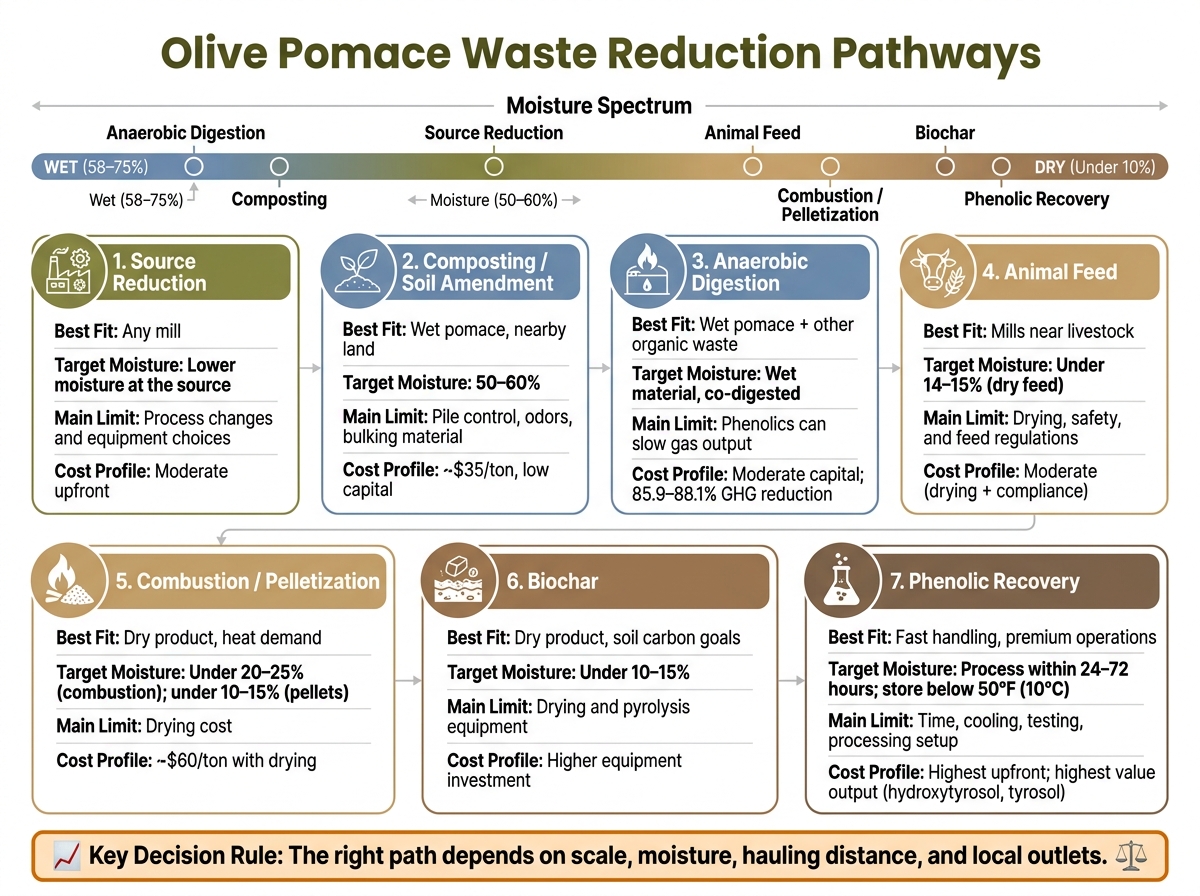
Olive Pomace Waste Reduction Pathways: Moisture, Cost & Best Fit
Engineer recycles olive pomace into fuel pellets
sbb-itb-4066b8e
Quick comparison
| Path | Best fit | Main limit | Typical target moisture |
|---|---|---|---|
| Source reduction | Any mill | Process changes and equipment choices | Lower moisture at the start |
| Composting | Wet pomace, nearby land or compost outlet | Pile control, odors, bulking material | 50–60% |
| Anaerobic digestion | Wet pomace plus other organic waste | Phenolics can slow gas output | Wet material, often co-digested |
| Feed | Nearby livestock | Drying, safety, and feed rules | Under 14–15% for dry feed |
| Combustion/pellets | Dry product and heat demand | Drying cost | Under 20–25% for combustion; under 10–15% for pellets |
| Biochar | Dry product and soil-use goal | Drying and pyrolysis equipment | Under 10–15% |
| Phenolic recovery | Fast handling, tighter quality control | Time, cooling, testing, processing setup | Best when processed soon after extraction |
What this means for me is simple: the right path depends on scale, moisture, hauling distance, and local outlets. Small mills often start with composting. Mid-size mills may split pomace between compound recovery and digestion. Large sites can support multi-step use if volume stays steady.
Below, I’d focus on one question at each step: Can I reduce wet mass first, then move the pomace into the use that fits my site, budget, and timing?
Reduce Pomace at the Source During Production
Production decisions shape how much pomace a mill creates, how wet it is, and how expensive it becomes to handle.
Process Choices That Lower Residue Volume
The biggest lever is decanter design. Two-phase decanters use only a small amount of added water during processing, which cuts liquid waste in a big way. Some estimates put the drop in olive mill wastewater at up to 75% compared with older systems.
The catch is simple: the pomace comes out wetter and heavier. Two-phase systems usually produce pomace with 58–75% moisture, while three-phase systems produce about 40–57%. That sounds like a drawback, and in some cases it is. But wetter pomace can also be a better fit for composting and biorefinery use. In plain terms, these production choices reduce residue at the source before the mill even gets to reuse or disposal.
Beyond the system itself, malaxation settings matter more than many operators think. Keeping temperatures moderate - around 77–82°F (25–28°C) - and limiting mixing time to 20–40 minutes helps oil droplets come together while reducing oxidation and emulsion formation. Using less water during this stage also cuts wastewater volume and lowers overall pomace moisture.
Fruit quality at intake also affects the waste stream. Moving olives from harvest to mill without delay, and sorting out damaged or leafy fruit, leads to cleaner extraction and more consistent pomace.
For mills using two-phase systems, a continuous dewatering step after the decanter can cut pomace mass by 15–25% by removing free water and taking out kernel material. That drop can trim hauling costs and make the rest of the material easier to dry, store, or send to a composter or energy facility.
Source Reduction vs. Recovery vs. Disposal
| Strategy | Waste Impact | Operational Complexity | Likely Costs | Value Recovered |
|---|---|---|---|---|
| Source reduction | Lowest at the mill when process water, losses, and contamination are minimized | Medium to high | Often moderate upfront process changes | High, because it preserves oil and reduces residue burden |
| Recovery/valorization | Reduces disposal burden after generation | Medium to high | Moderate to high depending on dewatering/separation equipment | High, because water, kernels, oil, or bioactives can be recovered |
| End-of-pipe disposal | Highest waste burden | Low to medium | Variable, often recurring hauling and treatment fees | Low, usually little or no recovered value |
Source reduction cuts residue before recovery or disposal starts adding more cost. It also gives the mill more control. If less wet mass leaves the process in the first place, every step after that tends to get easier.
Quality Production and Responsible Byproduct Stewardship
Careful fruit handling and controlled extraction produce cleaner pomace that is easier to recover. After source control, pomace should be matched to composting, energy, or recovery uses based on moisture and composition.
Choose the Right Reuse Pathway for Olive Pomace
Pick the reuse pathway based on pomace moisture, nearby infrastructure, and local rules. In plain terms: the right fit comes down to how much water is still in the pomace and how much processing the mill can handle.
Compost, Soil Amendment, and Biochar
Fresh pomace needs bulking material to prevent odors and anaerobic conditions. Adding 30–60% bulking material by volume - such as wood chips, straw, pruning residues, or municipal green waste - improves airflow and microbial activity enough to push the pile into the thermophilic phase and stabilize it.
A U.S. pilot study found that pomace mixed with sawdust and buffered over 40 days produced compost that supported plant growth and removed more than 90% of BOD from the liquid fraction. If you plan to apply compost to land, test maturity first with a germination index or respiration rate. And if you want to sell or distribute it, check state fertilizer labeling rules before moving ahead.
Biochar makes more sense when carbon storage matters more than sending nutrients back to the soil. It is produced by heating dried pomace without oxygen. Field trials using olive pomace biochar at 40 metric tons per hectare (about 16 U.S. tons per acre) improved soil water retention and reduced compaction without increasing phosphorus mobility. For mills in dry areas like California's Central Valley, that water-holding effect can be a big plus. Pyrolysis can also produce energy co-products that help cut on-site fuel costs.
If soil use is no longer the main goal and energy recovery becomes the priority, thermal systems or digestion are the next step.
Bioenergy, Fuel, and Anaerobic Digestion
Bioenergy routes fit best when pomace supply is steady and moisture can be kept in check. For solid fuel pathways - pelletizing, combustion, or gasification - pomace usually needs to be dried from 60%+ initial moisture down to 8–12% to meet pellet standards. The usual setup is mechanical dewatering first, followed by belt or rotary drying. Using waste heat from the mill's own boilers helps keep energy costs lower.
Anaerobic digestion works well for mills that already handle other organic wastes. Co-digestion with manure, food waste, or wastewater sludge helps dilute phenolic compounds that can slow biogas production. Co-digestion of partially dephenolized two-phase pomace with sewage sludge increased average daily biogas production by 39% and specific methane production by 40%. For smaller mills without on-site digestion capacity, it often makes more sense to partner with a regional biomass plant or digester through a long-term supply agreement than to build a separate facility.
For mills aiming at higher-value outputs, extracting bioactives should happen before heat exposure or long storage starts to reduce quality.
Phenolic Recovery and Feed Applications
Phenolic recovery can deliver the highest value, but it also demands the tightest handling. Pomace contains bioactive compounds such as hydroxytyrosol and tyrosol that have commercial use in food, cosmetic, and nutraceutical markets. To recover them, pomace needs to be collected fast, kept cool, and protected from long exposure to air and light so oxidation doesn't chip away at quality. Separating pomace by olive variety and production lot also helps keep extraction batches more consistent.
Quality control is a must here. A commercial program should include routine testing for total phenolic content, target compounds, and contaminants such as metals and pesticides. In the U.S., operations also need to follow FDA good manufacturing practices and any labeling rules that apply. This route is usually the best fit for larger, premium-focused operations that can support solvent extraction, membrane filtration, or chromatography.
Animal feed is a practical route for mills located near livestock operations. Dried or ensiled pomace fits best in ruminant diets, while poultry and pigs need tighter limits. In the U.S., feed use must meet FDA and state feed control rules, which can include ingredient definitions, labeling, and safety documentation. Common treatment steps include drying, ensiling with other forages, or adding feed additives to improve digestibility before pomace goes into a feed ration.
After choosing a pathway, the next step is to match storage and processing to that end use.
Handling, Storage, and Processing Requirements
What happens between the press and the next step decides whether pomace stays usable or starts to break down. So the first call after extraction is simple: get moisture under control.
Dewatering, Drying, and Moisture Control
Fresh pomace is usually too wet to reuse as-is. It needs dewatering or drying first. The right moisture level depends on where the material is headed:
- Composting: 50–60%
- Dry feed: under 14–15%
- Combustion or gasification: under 20–25%
- Pellets: under 10–15%
- Biochar feedstock: under 10–15%
After moisture is set, storage conditions and time to the next step matter just as much. If either goes wrong, the material can spoil fast.
Small mills often use screw presses to bring moisture down from about 65% to 45–50%. These systems usually handle around 0.5–2 metric tons per hour (0.6–2.2 short tons/hour). Mid-size sites often follow mechanical pressing with belt or rotary dryers. Thermal energy use usually falls between 2,500–4,500 kJ per kilogram of water evaporated (about 1,075–1,935 BTU/lb), depending on heat integration and insulation. At integrated plants, waste heat from on-site boilers or cogeneration units can support throughput above 20 metric tons/hour (22+ short tons/hour) while keeping final moisture below 10–12%.
Storage, Mixing, and Temperature Management
If pomace piles are left alone, things can go south in a hurry. Within hours, anaerobic pockets can form, temperatures can spike, and odors can start to build. Keep storage below 140°F (60°C). If piles hit 180–200°F (82–93°C), break them apart and cool them right away.
Putting pomace on concrete pads with perimeter berms helps contain leachate and keeps it off bare soil. Breathable tarps help too. Turning piles every 1–3 days can cut down on hotspots. For longer storage, mixing in dry bulking materials like straw, wood chips, or prunings improves airflow and helps hold a carbon-to-nitrogen ratio of 25–35:1. That keeps decomposition aerobic instead of putrefactive.
For phenolic recovery, timing gets tighter. Storing fresh pomace at below 50°F (10°C) and processing it within 24–72 hours of extraction can improve yields of target compounds like hydroxytyrosol.
Processing Requirements by End Use
Each reuse path comes with its own handling limits. The table below makes that easier to compare.
| Factor | Composting | Animal Feed | Bioenergy |
|---|---|---|---|
| Target moisture | 50–60% at start | <14–15% (dry); 50–60% (wet, immediate use) | <20–25% for combustion; <10–15% for pellets |
| Key pretreatment | Shredding, bulking agent blending, C:N adjustment, screening of contaminants | Drying, grinding, possible detoxification | Drying, size reduction, densification |
| Storage sensitivity | Moderate; can store for weeks if aerated and managed to avoid anaerobic conditions | High; mold and mycotoxin risk within days if warm and moist | Moderate; dry product stores for months if kept dry |
| Main contamination risks | Plastics, stones, soil, excess residual oil | Mycotoxins, pathogens, physical contaminants, excess phenolics | Metals, stones, high ash, chlorine, or sulfur that can cause corrosion or emissions issues |
| Typical equipment | Front-end loaders, mixers, windrow turners, screens, pads, and leachate collection | Dryers, mills, mixers, lab testing | Dryers, grinders, pellet mills or briquette presses, combustion or gasification units |
Composting usually needs less capital, but it asks for more hands-on pile management. Feed and bioenergy routes usually need more spending on drying and quality control. In plain terms, handling needs can shape the final strategy just as much as market demand or plant size.
Those handling requirements set up the strategy comparison in the next section.
How to Choose a Pomace Waste-Reduction Strategy
Comparing Pathways by Cost and Impact
Once you know the pomace’s moisture level, storage window, and likely end use, the next step is simple: compare cost per ton against the result you want.
Use an all-in cost per ton of pomace managed. That means total yearly spending on hauling, drying, equipment, and labor, then subtract any income from products sold, and divide that number by total yearly pomace tonnage.
Published analyses give a useful starting point. Some have used $35/ton for composting and $60/ton for drying and combustion, with capital recovery included. Anaerobic digestion tends to look better when pomace is co-digested with other organic wastes. On the impact side, one life-cycle assessment comparing anaerobic digestion with standard pomace oil extraction found that digestion cut global impact by 85.9% to 88.1%.
Composting may not deliver the same emissions cuts, but it does return nutrients to the soil and supports soil health. For mills with nearby land, that can be the deciding factor.
| Pathway | Typical cost profile | Key revenue source | Environmental strength |
|---|---|---|---|
| On-site composting | Low capital, modest operating cost | Compost sales, avoided disposal fees | Nutrient recycling, soil health |
| Anaerobic digestion | Moderate capital, site-dependent operating cost | Biogas, electricity | GHG reduction, landfill avoidance |
| Combustion/pelletization | Moderate cost if drying is needed | Heat, power | Renewable energy, carbon reduction |
| Phenolic recovery + biogas | Higher upfront investment | High-value extracts, energy | Circular economy, cascade use |
The catch? These options don’t look the same at every plant size.
Implementation Scenarios for Small, Mid-Size, and Integrated Olive Operations
Cost and impact help narrow the field. After that, scale usually decides what can work in practice.
Small operations - a few hundred tons of olives per season - usually get the best fit from low-cost, low-complexity routes. A small premium mill can begin with on-site windrow composting, mixing pomace with pruning residues or other carbon-rich material and turning the pile now and then for aeration. Composting usually takes 7–9 months and can yield a stable soil amendment for on-farm use or local sale.
Mid-size operations - several thousand tons per year - have enough volume to support a multi-step setup. One practical route is to recover phenolic compounds from part of the fresh pomace, then send the remaining wet material to an anaerobic digester or co-digestion site. The leftover solids can still go to fuel, composting, or other recovery uses.
Integrated operations or regional biorefineries can treat pomace as a feedstock platform instead of a single waste stream. At that scale, gasification can turn pomace into power while also recovering heat and water, but it fits only large sites with steady feedstock and the ability to manage permits. Multi-product systems - phenolics, biogas, biochar, and compost - also make more sense here, since bigger operations are usually better equipped to deal with air permits, waste approvals, and land-application rules.
Conclusion: Key Steps to Reduce Olive Pomace Waste
The final choice usually comes down to three things: scale, moisture, and local infrastructure.
The first move should happen at the mill. Reduce waste at the source by choosing extraction methods that limit pomace volume and moisture before you decide how to reuse it. After that, match the pathway to the material. Wet pomace fits composting or digestion. Drier pomace fits combustion, pelletization, or extraction. Day-to-day handling - dewatering, pile management, and storage timing - also affects how much value you can get from any route.
Cost and local conditions set the upper limit. Hauling distance, moisture content, access to composting or biogas, and permit rules often matter more than the option that looks best in a spreadsheet. Start with the route that fits your current scale, track first-season revenue, and build toward cascade use as volume and capital grow. The best plan matches scale, moisture, infrastructure, and regulation.
FAQs
Which olive mill system creates less waste overall?
The two-phase extraction system produces less waste than the old three-phase setup. In some cases, it can cut wastewater volume by up to 75%.
Here’s the main difference. A three-phase system produces about 50% wastewater and 30% solid waste per ton of olives. A two-phase system cuts those byproducts and produces a high-moisture pomace known as alperujo instead.
How do I choose the best olive pomace reuse option?
Assess your operation’s scale, your pomace’s moisture content, and your main resource-recovery goal.
If your pomace has high moisture, anaerobic digestion is often a good fit. It can turn that wet material into biogas and fertilizer.
If the residue is drier, biomass energy systems usually make more sense.
If you want the best financial and environmental return, start by extracting high-value polyphenols. After that, send the leftover biomass to anaerobic digestion or composting.
A waste audit helps you line up the right method with your byproduct volume and composition.
What is the cheapest way to reduce olive pomace hauling costs?
The cheapest way to cut olive pomace hauling costs is often to process it on-site first. The logic is simple: if you reduce the pomace’s volume and weight before it leaves the facility, you have less material to move, and that usually means a lower transport bill.
One of the clearest examples is drying. Drying wet pomace at the facility can sharply reduce how much needs to be shipped. Less moisture means less weight. And less weight means fewer hauling costs.
When it makes sense, on-site waste-to-energy systems can shrink off-site disposal needs even more, or remove them altogether. Instead of paying to send material away, the operation uses part of that waste stream at the source.
For smaller producers, buying and running this kind of setup alone may be a stretch. In those cases, sharing processing infrastructure through cooperatives or consortiums can help spread costs and make on-site treatment more practical.