

How Mediterranean Diet Uses Olive Oil Daily
I use olive oil as my main added fat - not an extra layer. My starting point: swap butter for 1 teaspoon of olive oil on toast or in a skillet, then count any oil added later.
Here’s my approach throughout the day:
- Breakfast and lunch: Use measured amounts on toast, eggs, salads, or grain bowls.
- Dinner and snacks: Use it for roasting, sautéing, finishing dishes, or making bean dips.
- Buying and storage: Choose extra virgin olive oil, check the harvest date, and keep it sealed in a cool, dark cupboard.
<u>The goal is replacement, not more fat.</u> I keep vegetables, beans, whole grains, nuts, and fish at the center of meals. Oil portions are examples, not daily targets - your needs and medical guidance come first.
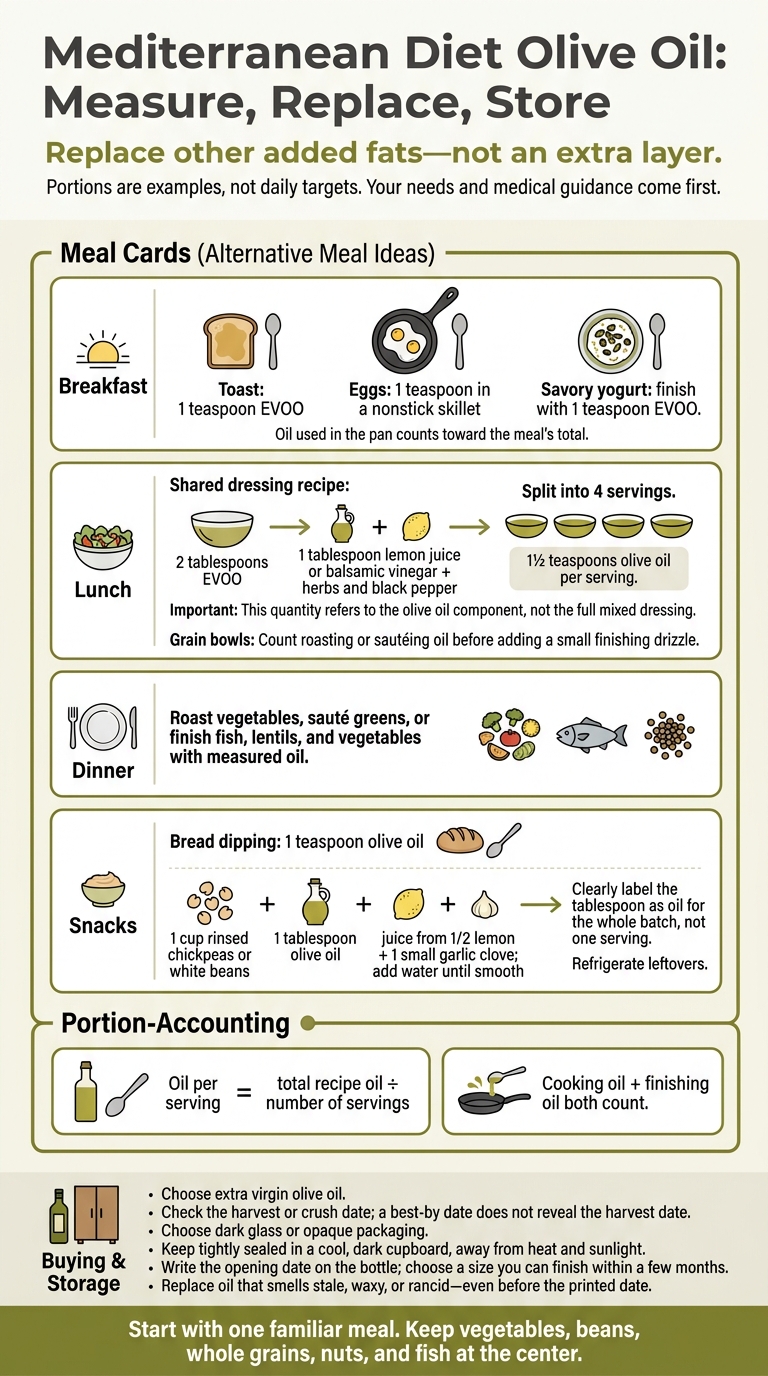
Mediterranean Diet Olive Oil: Measure, Replace, Store
Olive Oil at Breakfast and Lunch
Breakfast: Toast, Eggs, and Savory Yogurt
Brush 1 teaspoon extra virgin olive oil (EVOO) on whole-grain toast, then add sliced tomato, basil or oregano, and black pepper. For eggs, heat 1 teaspoon in a nonstick skillet, sauté spinach, mushrooms, onions, or bell peppers, then add the eggs. The oil used in the pan counts toward the meal’s total.
For a savory yogurt bowl, stir diced cucumber, chopped dill or mint, lemon juice, and black pepper into plain yogurt. Finish with 1 teaspoon of EVOO and serve with whole-grain toast or vegetables for dipping. Measure the drizzle with a spoon.
At lunch, use olive oil in dressings or as a finishing drizzle for bowls.
Lunch: Salads and Grain Bowls
Whisk 2 tablespoons EVOO with 1 tablespoon lemon juice or balsamic vinegar, plus herbs and black pepper. Split into four servings; each gets 1½ teaspoons. Toss gradually so the dressing coats the food evenly. Use it on greens or chickpea or lentil salads with cucumber, tomatoes, and parsley.
Build a grain bowl with about 1 cup cooked farro or brown rice, chickpeas, leafy greens, and roasted vegetables. Count oil used in roasting or sautéing, then add only a small finishing drizzle. Lemon juice and herbs add flavor without extra oil.
Carry this measured approach into dinner and snack time.
sbb-itb-4066b8e
Olive Oil at Dinner and Snack Time
Dinner: Roasted Vegetables, Greens, and Fish
At dinner, use olive oil for more than dressing: roast vegetables, sauté greens, or add a drizzle before serving.
Toss zucchini, bell peppers, or cauliflower with measured olive oil, herbs, and pepper. Roast at 400°F until tender and lightly browned. Check smaller zucchini or pepper pieces after about 20 minutes; larger cauliflower florets need more time.
Warm a small amount of olive oil over medium heat, then sauté onions and garlic until fragrant. Add leafy greens and cooked beans for a simple dinner, or use the mixture as a base for soup or grains.
Finish cooked fish, lentils, or vegetables with a small drizzle of olive oil.
Snacks: Bread and Bean Dips
Keep portions measured at snack time, too.
Dip a slice of whole-grain bread in 1 teaspoon of olive oil. Season the oil with herbs and black pepper if you like. Blend 1 cup rinsed chickpeas or white beans with 1 tablespoon olive oil, juice from 1/2 lemon, and 1 small garlic clove. Add water until smooth, then serve with carrots, cucumber, or bell peppers. Refrigerate leftovers.
Introduction: Olive Oil in the Mediterranean, Plant-Forward Kitchen
Choosing, Measuring, and Storing Olive Oil
As olive oil becomes part of each meal, choose a recently harvested bottle, measure each pour, and store it properly.
Choose Oils for Cooking and Finishing
Look for extra virgin olive oil, a harvest or crush date, and dark glass or opaque packaging.
Big Horn Olive Oil offers ultra premium extra virgin olive oils and balsamic vinegars in traditional and infused flavors. Use unflavored EVOO for cooking and finishing. Choose infused oil when its flavor fits the dish.
Mild oils suit eggs and yogurt; peppery oils suit beans, greens, and grain bowls.
Measure Oil Across the Day
Measure oil before adding it. For a shared recipe, divide the total amount of oil by the number of servings. These amounts are examples, not a target - adjust them to your needs and medical guidance.
Cooking: 1 teaspoon per serving.
Dressing: 1 tablespoon per serving.
Dipping or finishing: 1 teaspoon to 1 tablespoon per serving.
Store Oil Away From Heat and Light
Keep olive oil tightly sealed in a cool, dark cabinet away from heat and sunlight. Heat, light, and oxygen speed up quality loss. Dark glass or an opaque tin provides extra protection from light.
Before buying, check the harvest and best-by information. A best-by date doesn't tell you when the olives were harvested. Pick a bottle your household can finish within a few months of opening, and write the opening date on it. Replace oil that smells stale, waxy, or rancid - even if the printed date hasn't passed.
Conclusion: Start With One Meal
Keep it simple: use olive oil in small, measured amounts throughout the day.
Olive oil fits breakfast, lunch, dinner, and snacks: toast or eggs, salads and grain bowls, roasted vegetables and beans, and bread or raw vegetables with dip.
Make it your main added fat - not a substitute for vegetables, fruit, whole grains, beans, nuts, and fish.
Start with one familiar meal this week. Build from that change by swapping olive oil for butter, margarine, or other added fats rather than using them together. Measure what you use for cooking and finishing, and use only as much as the meal needs.
Choose a recently produced extra-virgin olive oil you like, and keep it in a cool, dark cupboard.
FAQs
How much olive oil fits my daily calorie needs?
A tablespoon of extra virgin olive oil has about 120 calories, so include it in your daily calorie total. Its healthy monounsaturated fats and polyphenols may help you feel full, which may make it easier to manage your calorie intake. For a flavorful, nutrient-dense addition to meals, drizzle it over salads, use it to sauté vegetables, or add a finishing touch to proteins.
Is extra virgin olive oil safe for roasting at 400°F?
Yes, extra virgin olive oil is safe for roasting at 400°F. It stays stable between 350°F and 410°F, so you can use it to roast vegetables and other dishes without the oil breaking down.
Big Horn Olive Oil recommends its high-quality extra virgin olive oil for roasting because it keeps its flavor and nutritional profile within this temperature range.
How do I replace butter with olive oil in recipes?
For most cooking and baking, use 3/4 cup of Big Horn Olive Oil for every 1 cup of butter. When replacing liquid oils, use the same amount of olive oil.
Olive oil adds moisture and a rich, layered flavor to cakes and muffins. But it’s not a good fit for recipes that rely on creaming butter and sugar to incorporate air, or for frostings that need solid fat.